Skip to content

Austin · West Lake Hills · Rollingwood · Lakeway · Steiner Ranch

Glass Kitchen Backsplash Installation in Austin, TX

Austin Custom Countertops is the Travis County countertop shop that installs glass kitchen backsplashes in Austin, TX, specializing in back-painted glass panels, glass mosaic and glass subway tile, and full-height splashes measured in the same visit as your new countertops. We offer low-iron glass for whites that stay white, outlet cutouts planned at template, and a sealed silicone joint where the glass meets the stone.

  • Licensed, insured & bonded
  • Free in-home measure
  • One firm written price

Request a FREE Quote!

Glass Kitchen Backsplash Installation in Austin, TX

Our team provides a backsplash that is planned around the countertop it sits on, because the top decides where the glass starts and where every outlet opening lands, delivering a wall that wipes clean in one pass, colour that reads true against your cabinets, and a full kitchen backsplash that looks like part of the countertop job rather than something added later for homes across Austin. Every countertop under the glass is cut on our own CNC in our own Austin shop and set by the crew that templated it. We are licensed, insured and bonded, and the workmanship warranty is written onto the quote before you sign.

From holding a paint sample behind a piece of low-iron glass in your own kitchen light to cutting the last outlet opening and running the final bead of silicone along the counter, our team handles every detail. We are serving Austin, West Lake Hills, Rollingwood and Steiner Ranch, and the written estimate lists the glass type, the square footage covered, every cutout and the joint detail, so nothing is being decided on install day.

How we work

Licensed, insured & bondedDocumented insurance and permits where the job needs them
Top and splash togetherCountertop and backsplash measured at one visit, quoted on one price
Laser templatingDigital templates off your walls and cabinets, outlets and windows located
Our own shop and crewCountertops cut on our CNC in Austin, installed by the people who measured

Why glass is its own trade

A glass backsplash looks simple on a photograph and is unforgiving in the wall. Glass absorbs nothing, so it never stains and never needs sealing, but that same property means mortar does not soak into it the way it grips the back of a ceramic tile. The bond depends on the setting material wetting out the whole back of each piece, with no voids.

Glass is also translucent. Whatever sits behind it shows. Grey thinset reads as a dirty shadow through a pale mosaic, trowel ridges show as stripes, and a dry patch behind a tile looks like a bubble from across the room. That is why glass mosaic goes onto a white setting mortar made for glass, with the ridges flattened or the backs coated so the colour you chose is the colour you see.

Finally, glass moves. It expands with heat at a different rate than the drywall and the stone, and its edges are brittle. Every place the glass meets something else, the countertop, an inside corner, a window return, an upper cabinet, has to be a flexible joint rather than a hard grout line. Get those three right and the glass lasts as long as the kitchen.

The glass backsplashes we install

Glass mosaic

Small pieces on a mesh or paper backed sheet, in squares, hexagons, linear strips and blends. Mosaics follow an uneven wall better than any other glass format, and the grout lines give a busy kitchen some texture. They suit a cook who wants colour and pattern and does not mind wiping grout joints.

Glass subway tile

The classic brick layout in glass, usually in a gloss or frosted face. It reads cleaner than a mosaic, with fewer joints, and it pairs well with a quiet quartz or granite top where the wall is meant to carry a little shine without competing with the stone.

Back-painted glass panels

A single sheet of tempered glass, painted on the back in the colour you choose, fixed to the wall in one piece from countertop to cabinet or to ceiling. No grout at all. It is the most modern looking option and the easiest to clean, and it asks the most of the measuring, because the panel cannot be trimmed once it arrives.

Installed with your countertops

All three go in as a full kitchen backsplash, alongside or after a countertop job of ours, never as a patch on an existing splash.

Back-painted glass panels, done right

Back-painted panels are made from tempered glass, and tempering sets the rules for the whole job. Tempered glass is heated and rapidly cooled so its surface sits in compression, which makes it several times stronger than ordinary glass. The catch is that it cannot be cut, drilled or notched afterwards. Every outlet opening, every switch opening, every notch around a window sill has to be cut before the glass goes into the tempering furnace.

So a panel backsplash is measured twice. We template at the same visit as your countertops, which lets us plan the panel layout, the seams and the colour. The final panel measurement is then taken off the installed top, because the glass sits on the stone and a sixteenth of an inch matters when the openings are fixed in the glass for good.

Panel size is limited by what can be carried into the house and set on a wall without flexing. A long run is divided into panels, and we put the joints where they look intentional: at an inside corner, at the edge of a window, at the line of a range hood, never in the middle of the wall where your eye goes first.

The wall has to be flat, because a painted panel shows every wave in the drywall behind it. Plenty of Austin's older ranch homes have bowed or out of plumb walls, so we check with a straightedge at the measure and tell you up front if the wall needs skimming first.

Low-iron glass and the colour you actually get

Ordinary clear glass is not clear. It carries a little iron,, which gives it a green tint you can see at the edge of a sheet. On a back-painted backsplash, the paint is seen through the full thickness of the glass, and the green shifts the colour. A bright white turns minty. A pale grey turns sea green. A blue drifts toward teal.

Low-iron glass has most of that iron removed, so the panel reads close to the colour of the paint behind it. For whites, creams, pale greys and soft blues it is the difference between the kitchen you sampled and a kitchen that looks slightly off. For deep colours such as black, navy or charcoal, standard glass is often fine, because the tint disappears into the dark.

We show you paint samples behind both kinds of glass on your own wall. A colour that looks right under a showroom LED can look different in hard Austin afternoon sun through a west window, so you choose in your light, not from a swatch card.

Outlets, switches and windows

A kitchen backsplash is full of electrical devices, and they are where most glass jobs look amateur. Adding glass to the wall adds thickness, so the outlet boxes end up recessed behind the new surface. The fix is box extenders, which bring the device forward so it sits flush and tight against the glass with the cover plate seated properly instead of rocking on the edge of a tile.

With mosaic and subway tile, pieces are cut on a wet saw with a blade made for glass and fitted around each box so the cover plate overlaps a clean edge. With panels, the openings are cut into the glass before tempering to dimensions taken at the final measure, so the outlet sits centred in its opening. If you want to move or add outlets, or switch to under-cabinet power strips that keep the glass clean, that decision belongs at the measure, not after the panel is made.

Window sills and returns get the same planning. Glass can die into the window casing, wrap the return, or stop at the sill, and each choice changes the cut list.

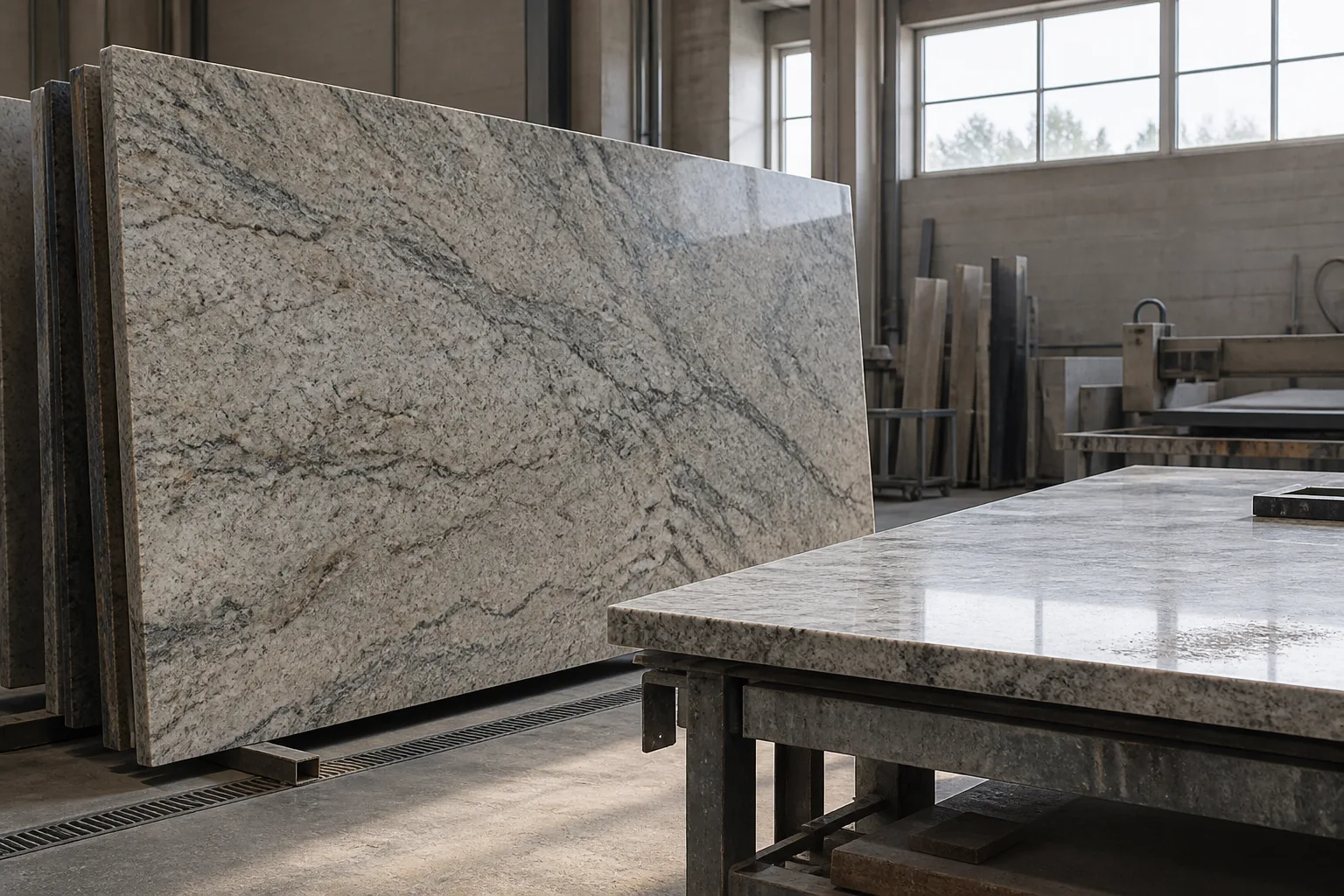
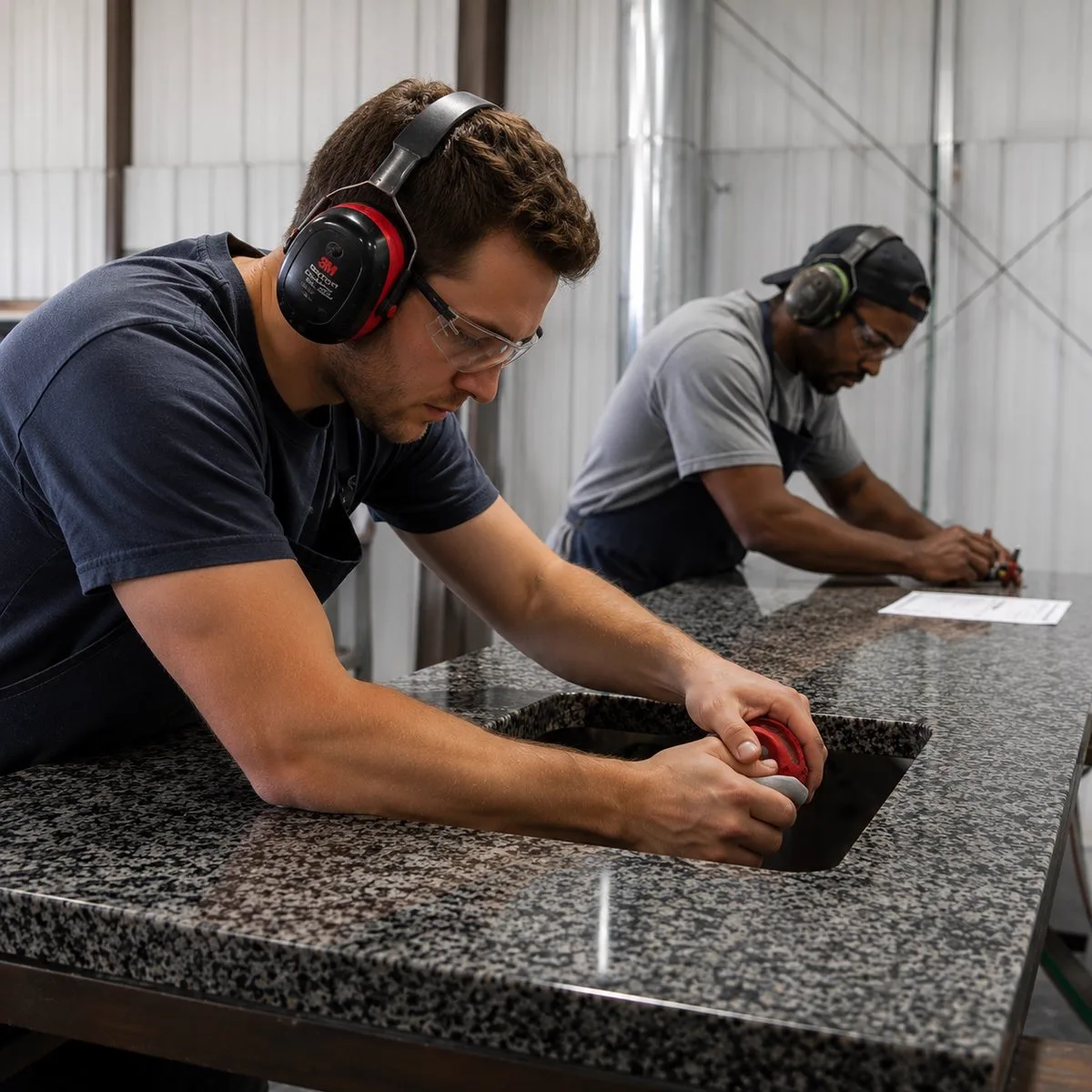
Two fabricators in ear defenders polishing a sink cutout in a dark speckled granite top in an Austin metal shop

Behind the range

The wall behind a cooktop sees heat, grease and steam every day, and it is where most people want the glass to look its best. Glass mosaic and glass subway tile set in a cement based mortar handle that wall well. Back-painted panels behind a range are always tempered glass, and the layout follows the clearances in your range or cooktop maker's installation guide, which is the document that governs what can sit how close to the burners.

A slide-in range with no backguard leaves the splash fully exposed, so we check the burner layout, the distance to the wall and the hood before recommending a panel there. Where a panel is not the right call, we suggest mosaic for that section.

Where the glass meets the countertop

The joint between the backsplash and the countertop is the one that fails first on a badly installed kitchen. The stone and the wall are two different structures. The top sits on cabinets, the glass sits on the wall, and they move independently through the seasons. A rigid grout line along that joint cracks, lets water run down behind the countertop, and then stains.

We leave a small gap at the bottom of the glass and fill it with a colour matched silicone sealant, tooled into a clean bead. The same flexible joint goes at every inside corner and every place the glass changes direction. On a mosaic or subway splash the grout stops short of those joints. On a panel, the bottom edge sits on setting blocks over the countertop and the bead seals it.

Because we installed the countertop too, we know exactly how level and flat it is, and the glass is set to it rather than to a guess.

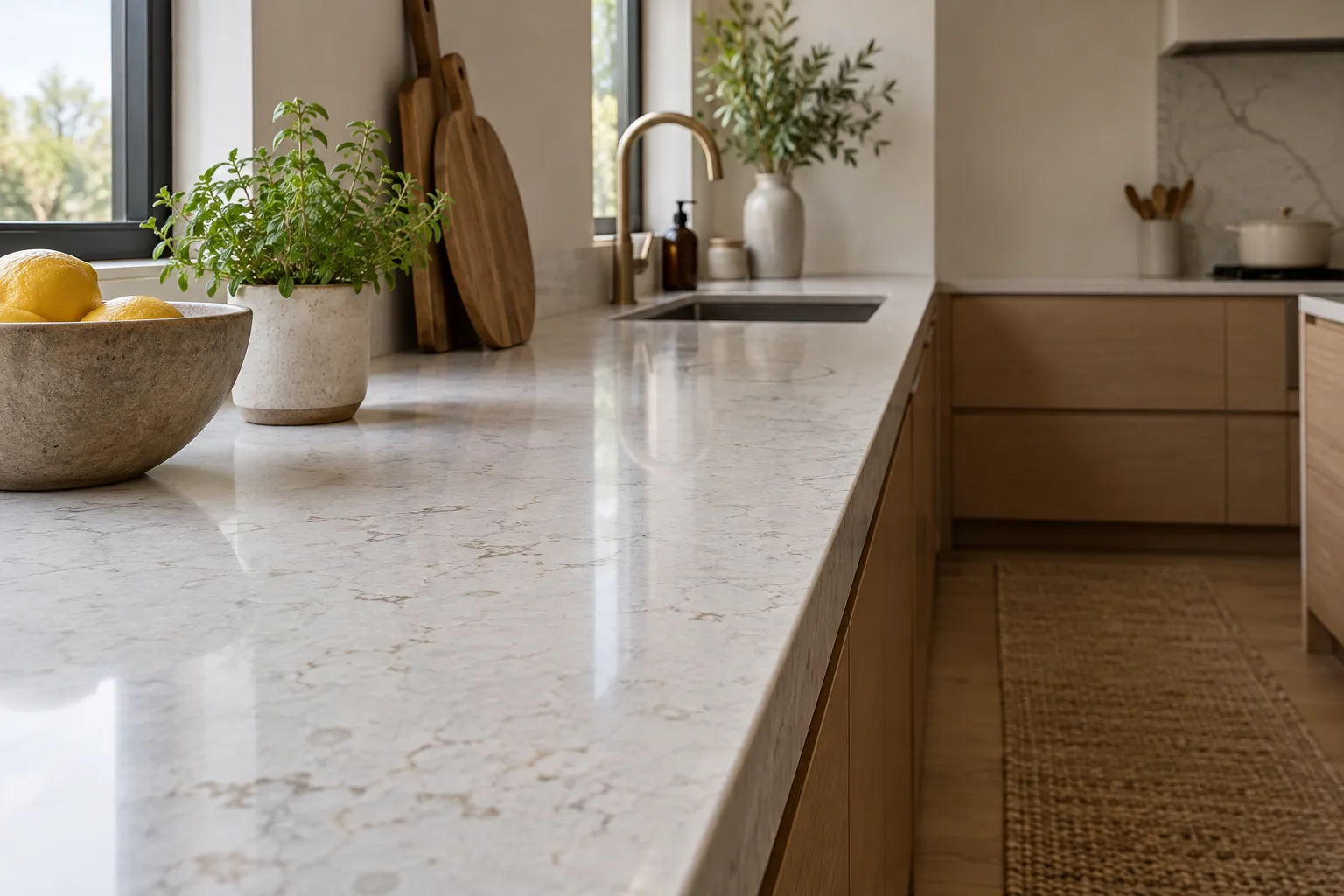
Polished white quartz run photographed along its squared edge, with an undermount sink and white oak flat panel cabinets

Measure the top and the splash together

The best time to put in a glass backsplash is when the countertops are being replaced, and the worst is a year later on top of a top somebody else set. A lot of Austin's newer subdivision homes came with a short four inch stone splash along the back of the counter. When we are replacing the kitchen countertops, that short splash comes off with the old top and the glass runs full height from the new stone, which is cleaner and gives the outlets a consistent surface.

One visit settles the questions that otherwise fall between two trades. Does the glass stop at the underside of the upper cabinets or run to the ceiling at the hood? Does it end at the side of the cabinets or at the wall? Where do the outlets go now that the splash is taller? Does the counter colour and the glass colour work together in your light? We answer them once and give you one firm written price for the full job.

The glass ties the top and the cabinets together, so it is worth choosing with the stone in hand. A light speckled quartz top with a pale glass panel gives a quiet, bright kitchen. A dark granite or soapstone-look counter makes a coloured mosaic stand out, like the blue-grey hexagons in the kitchen at the top of this page.

Living with glass in an Austin kitchen

Glass is the easiest backsplash to clean. Grease and tomato sauce wipe off a panel in one pass with warm water and a soft cloth, and there is no grout to discolour. On mosaic and subway tile, the glass itself needs nothing, and the grout joints are what you look after. Cement based grout is sealed after it cures. Epoxy grout is not sealed and resists stains on its own.

Austin's tap water is on the hard side, and the wall around the sink collects mineral spots as splashes dry. On glass they show more than on a matte tile. A quick wipe with a microfibre cloth after the dishes keeps it clear. If spots build up, a glass cleaner takes them off. Acidic cleaners are another matter, and the FAQ below explains which surfaces to keep them away from.

Skip scouring pads and abrasive powders, which leave fine scratches that catch the light. The paint on a panel is on the back, against the wall, so the face cleans like a window.

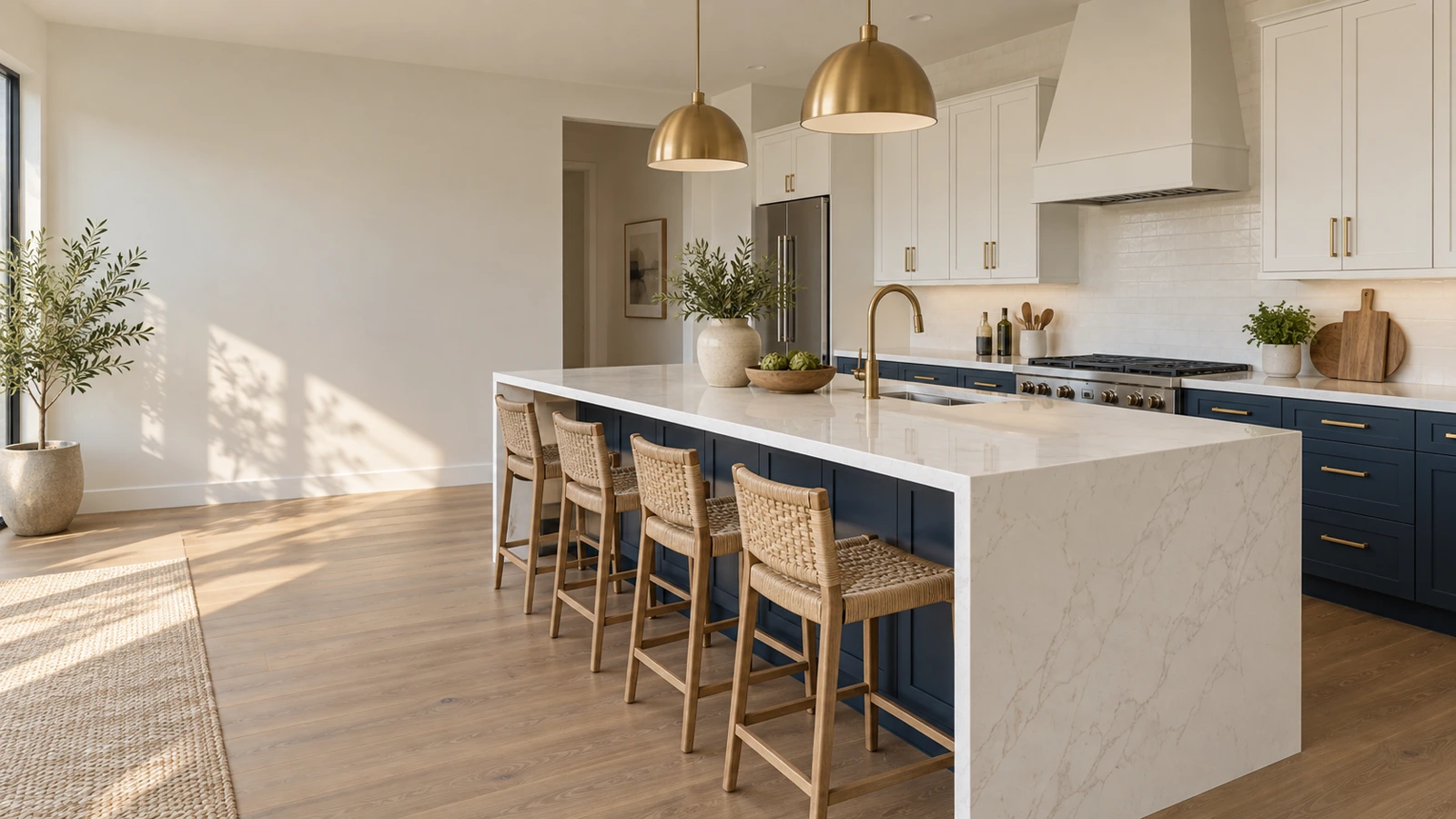
Kitchen with a white quartz waterfall island, navy shaker cabinets and brass pendant lights

Glass or tile for your backsplash?

Glass is for the kitchen that wants shine, colour and a surface that cleans in seconds. If you would rather have the texture of handmade zellige, the variation of natural stone or a matte porcelain that hides water spots, that is a different job with different setting methods, and our ceramic, porcelain, stone and zellige backsplash page covers it. Plenty of kitchens use both: a back-painted panel behind the range and tile on the long runs, or the reverse. We plan either from the same measure.

Countertops our backsplashes are set on

How the job runs

  1. Free in-home measure

    We laser template the countertops and the backsplash walls, locate every outlet, switch and window, and check the wall for flatness.

  2. Choose glass and colour

    You pick mosaic, subway or panel, and see paint or tile samples behind standard and low-iron glass in your own kitchen light.

  3. Countertops first

    Your new tops are cut on our CNC in Austin and installed. Panels are then final measured off the set stone and ordered with their openings cut before tempering.

  4. Glass installed and sealed

    Box extenders fitted, glass set, grout or panels finished, and a colour matched silicone joint run along the countertop and inside corners.

Glass backsplash questions

Do you install a glass backsplash on its own?

We install glass backsplashes as a full kitchen backsplash alongside or after a countertop job of ours. The bottom joint, the outlet layout and the panel measurements all depend on the top the glass sits on, so we plan both together. We do not take on single panel repairs or small patch jobs.

What is low-iron glass and do I need it?

Standard glass has a green tint from the iron in it, and on a painted panel that tint shifts the colour. Low-iron glass has most of the iron removed, so whites and pale colours look the way you chose them. For dark colours, standard glass is usually fine. We show you samples behind both before you decide.

Can you put glass behind my range?

Usually, yes. Mosaic and subway tile handle that wall well, and a panel there is tempered and laid out to your range maker's installation clearances. If a panel is not right for that spot, we suggest mosaic for that section.

What happens to my outlets?

They stay where they are unless you want them moved. Box extenders bring each device forward so it sits flush with the new glass and the cover plate seats properly. On a panel splash, the openings are cut into the glass before tempering, using measurements taken after the countertop is installed.

Why silicone at the countertop instead of grout?

The top and the wall move independently, so a grout line there cracks and lets water behind the counter. A colour matched silicone bead stays flexible and keeps water out.

How do I keep the glass clean with Austin's hard water?

Wipe the area around the sink with a microfibre cloth after the dishes and mineral spots never build up. For spots that do, a glass cleaner or diluted white vinegar works on the glass, but keep vinegar off marble, limestone and travertine countertops and off cement grout. Avoid scouring pads on any glass surface.

Free estimate

Plan your glass backsplash with your new countertops

Free measure across Austin and the surrounding Hill Country. One visit, one firm written price for the top and the glass.

Call (512) 649-1665

Calls only, we do not receive text messages.

Call (512) 649-1665