
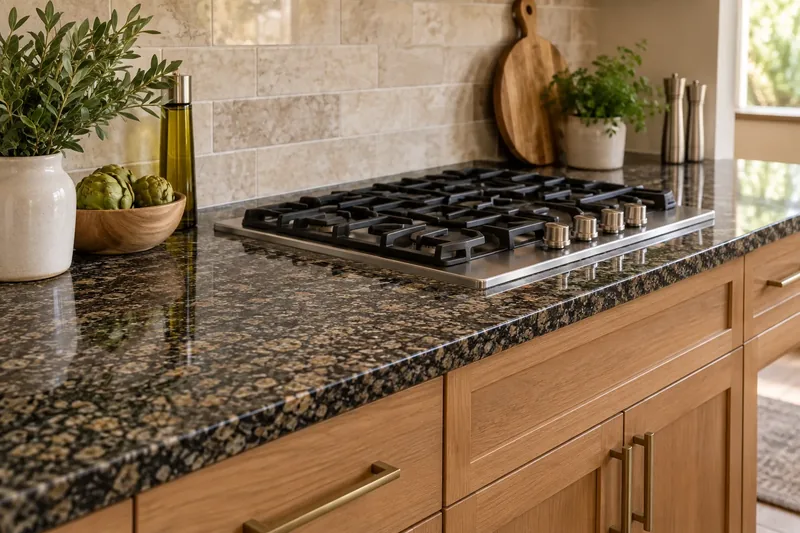
Granite Countertops
Natural granite countertops templated, fabricated and installed in Austin. Heat resistant, every slab unique, one firm written price. Free measure.
Quartz · Granite · Marble · Quartzite
Austin Custom Countertops is Travis County's trusted specialist in countertop services in Austin, TX, specializing in engineered quartz fabrication, granite countertop installation and full slab marble and quartzite work. We offer mitered island panels and stone window sills.
Request a FREE Quote!
Our team provides digital templating and in house CNC cutting, delivering countertops that fit the room they were measured in for homes and batch matched, repeatable specification for both residential and commercial projects. We fabricate every countertop in our own Austin shop, and the crew that templates your kitchen is the crew that sets it, so the written warranty on the seams and the fit belongs to us rather than to a subcontractor.
From the quarter inch of expansion clearance we leave beside a gas cooktop to a whole house of kitchen, bath and outdoor surfaces phased on one schedule, our team handles every detail. Serving Austin, Steiner Ranch, Barton Creek and Rollingwood, we template, fabricate and install with one shop and one crew, so the number you approve after the measure is the number at handover.
Natural granite countertops templated, fabricated and installed in Austin. Heat resistant, every slab unique, one firm written price. Free measure.
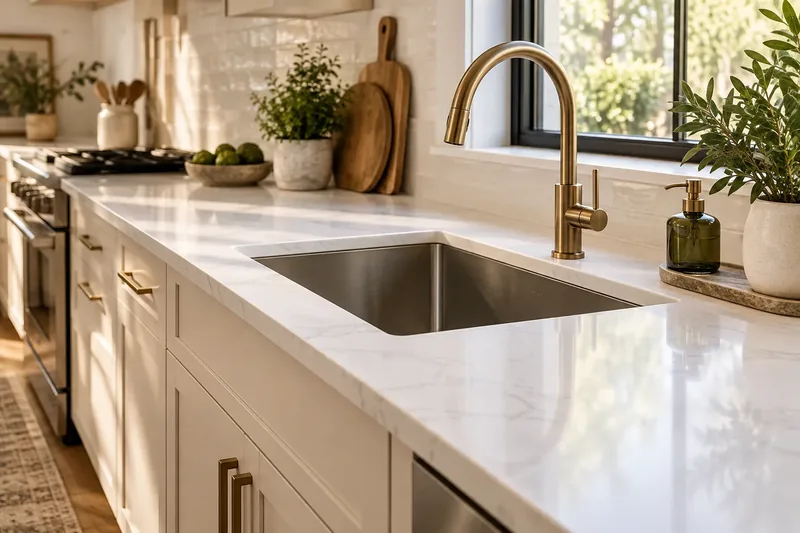
Engineered quartz countertops templated, fabricated and installed in Austin. Non-porous, never needs sealing, one firm written price. Free measure.
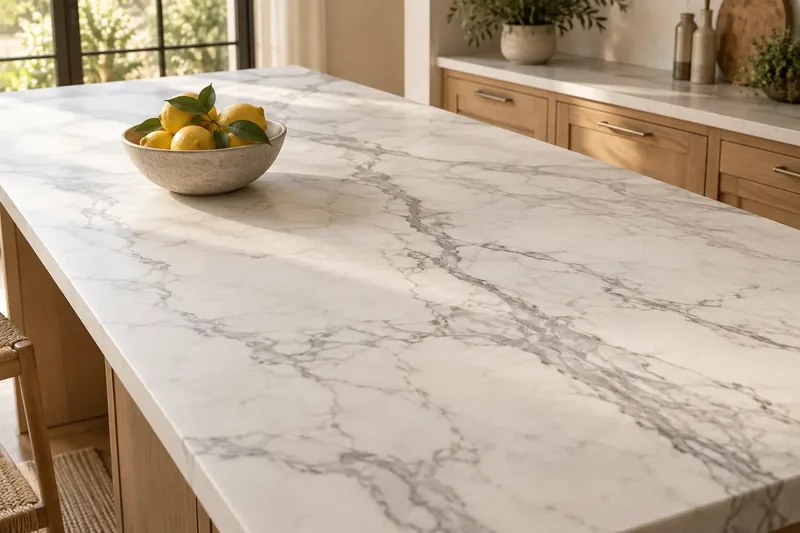
Marble countertops and vanity tops fabricated and installed in Austin. Honest advice on etching and sealing before you commit. Free measure.
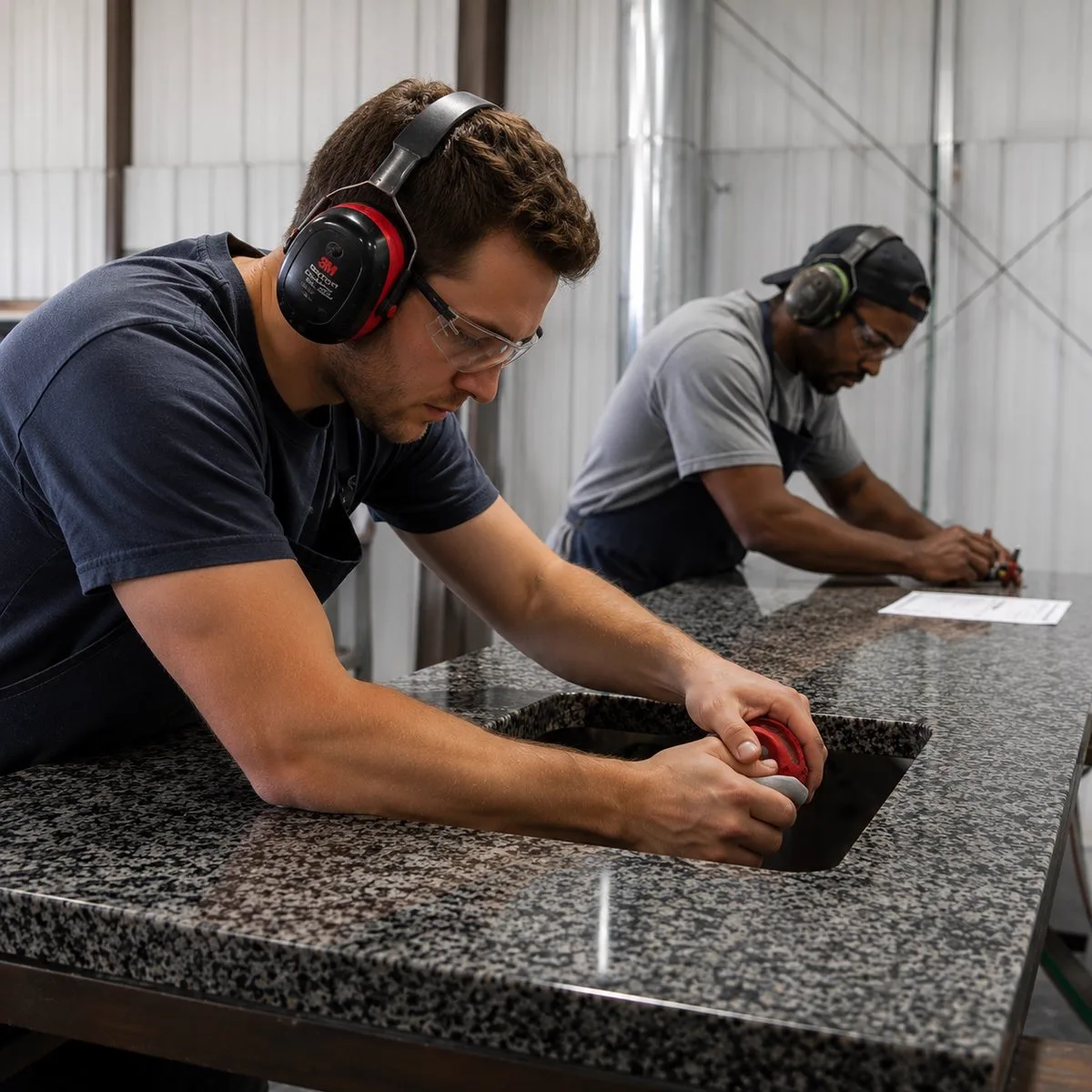
Slab layout, CNC cutting, mitred and laminated edges and every cutout made in our Austin shop before the stone reaches your home. Templated by the crew that installs it.
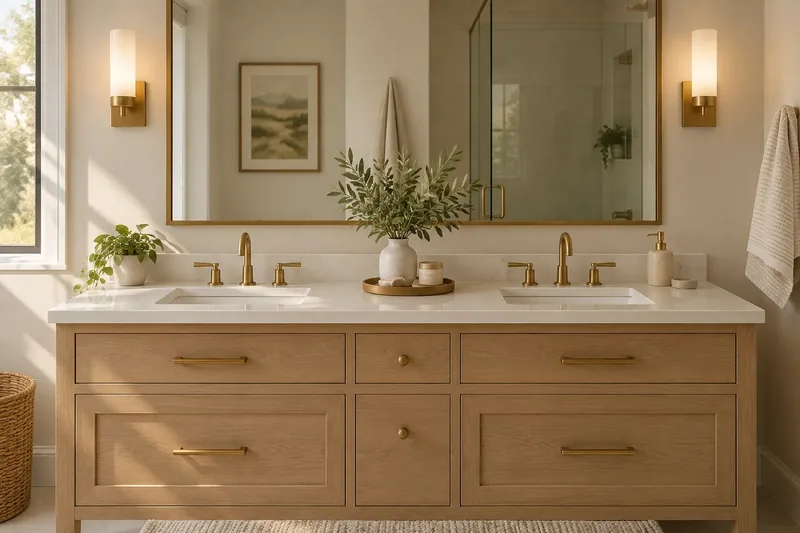
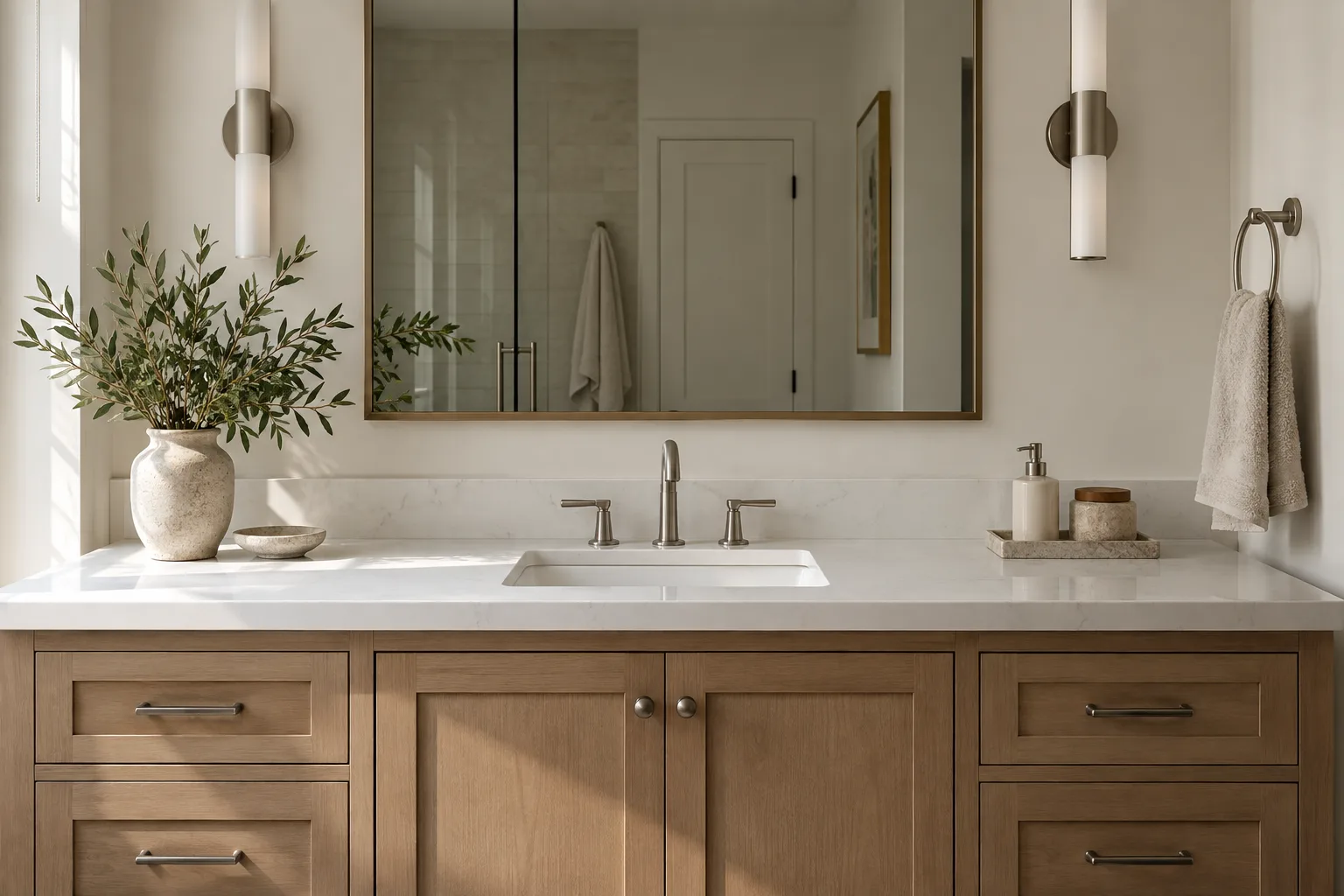
Custom bathroom vanity tops in Austin. Quartz, marble and granite, cut to your vanity with undermount or vessel basin cutouts. Free measure.
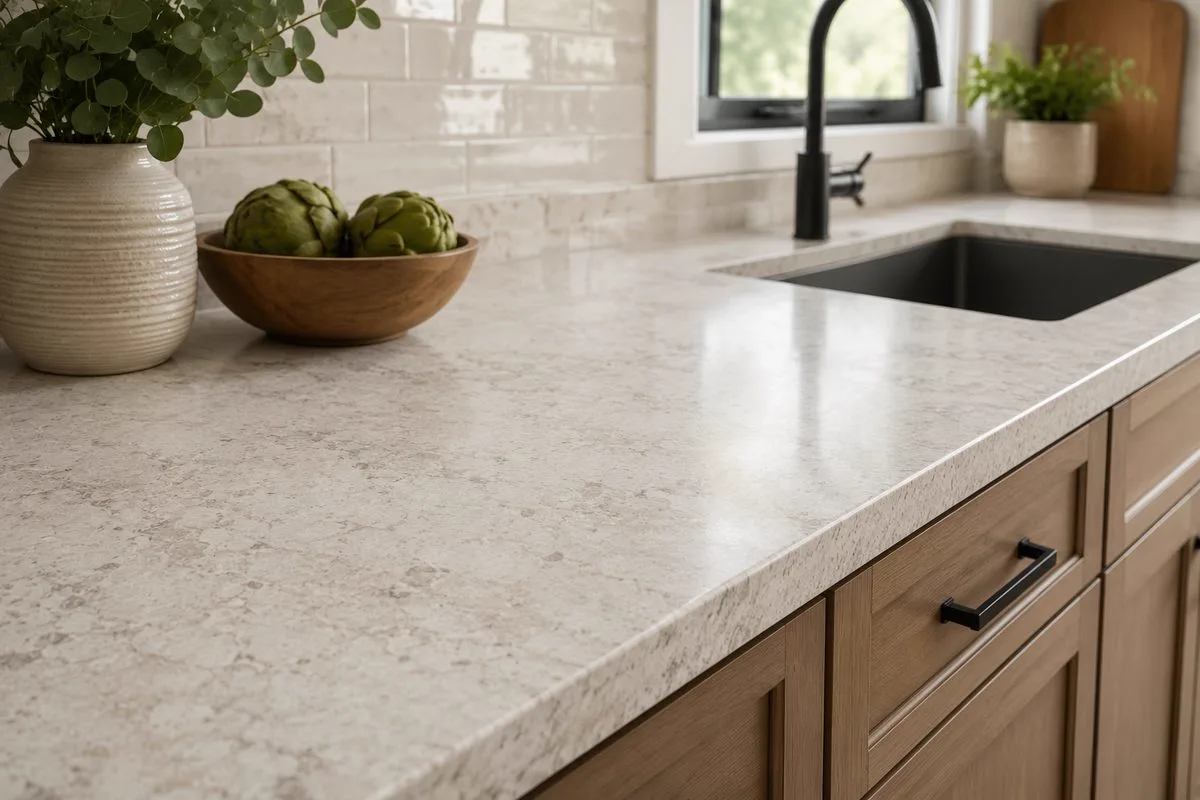
Unit packages for Austin home builders and apartment developers, quoted from plans and installed in phases by building or floor, with matching detail from the first unit to the last.
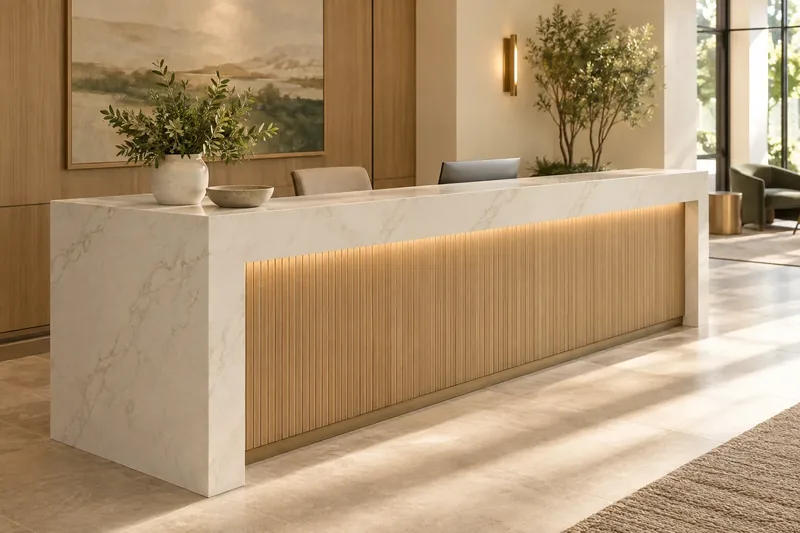
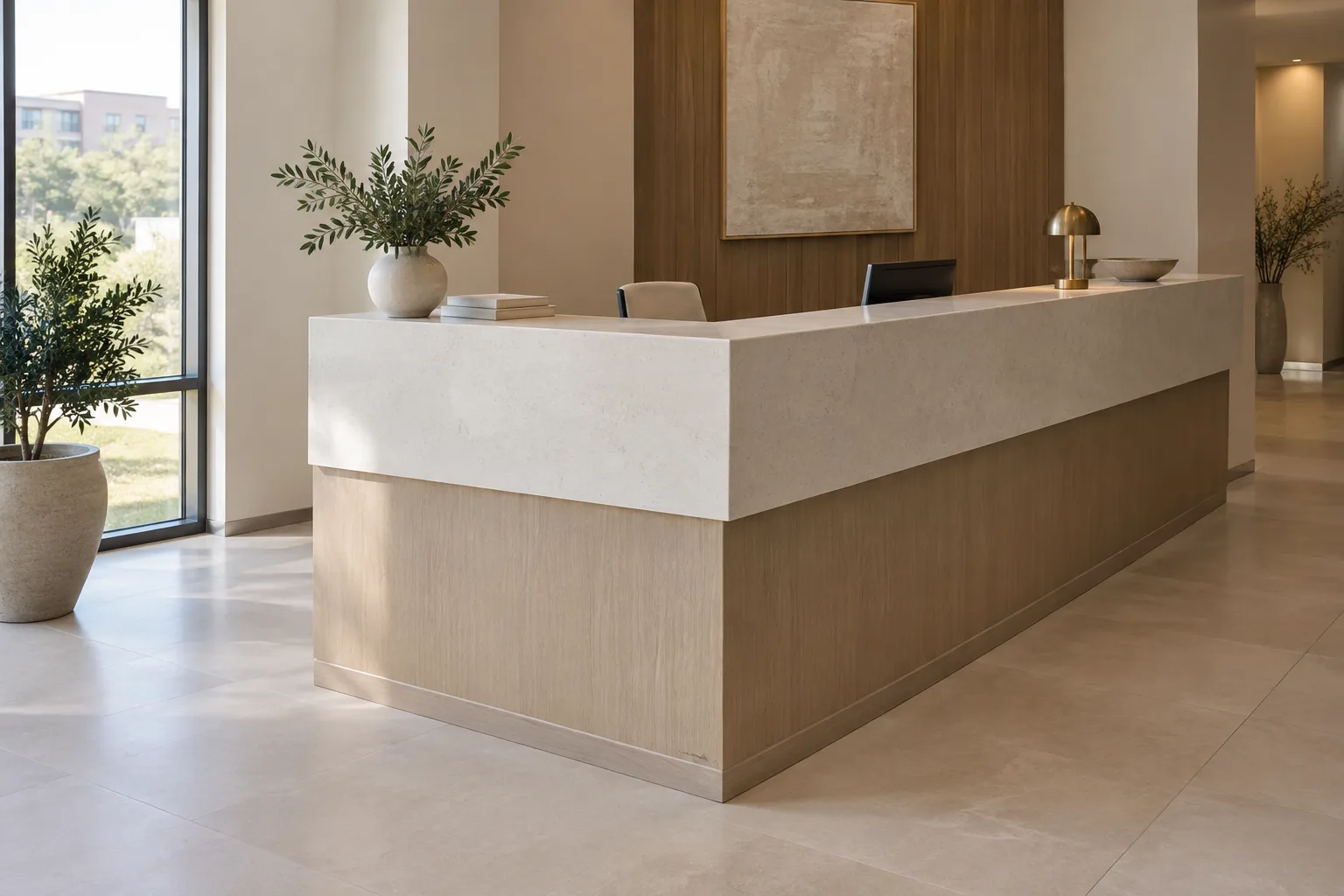
Commercial countertop fabrication in Austin. Multi-unit residential, restaurant and office fit-out. Bonded, insured, phased to your programme.
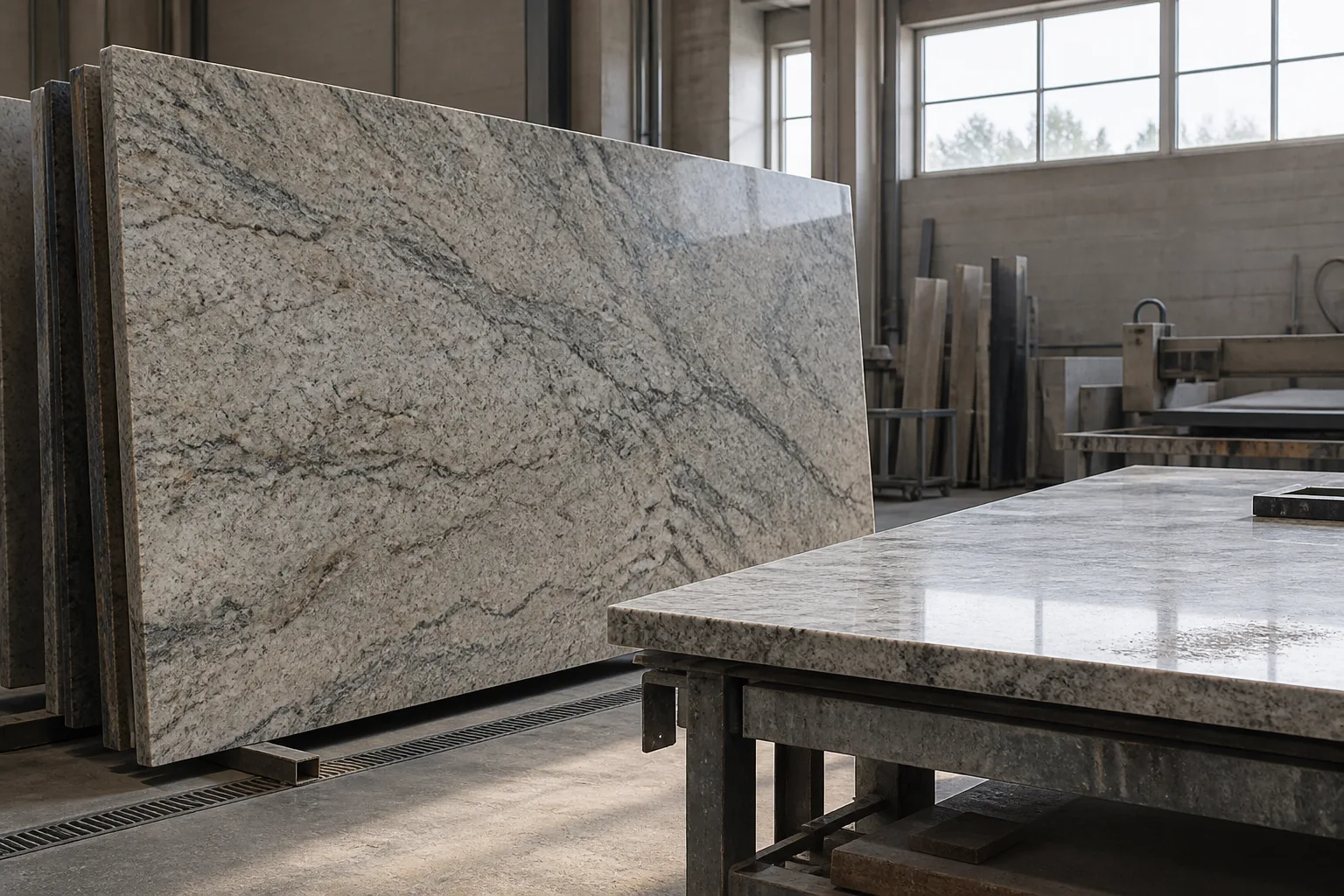
Fabricate-only or fabricate-and-install for remodelers, designers and cabinet shops, with shop drawings, templating on your schedule and turnaround dates you can promise your client.
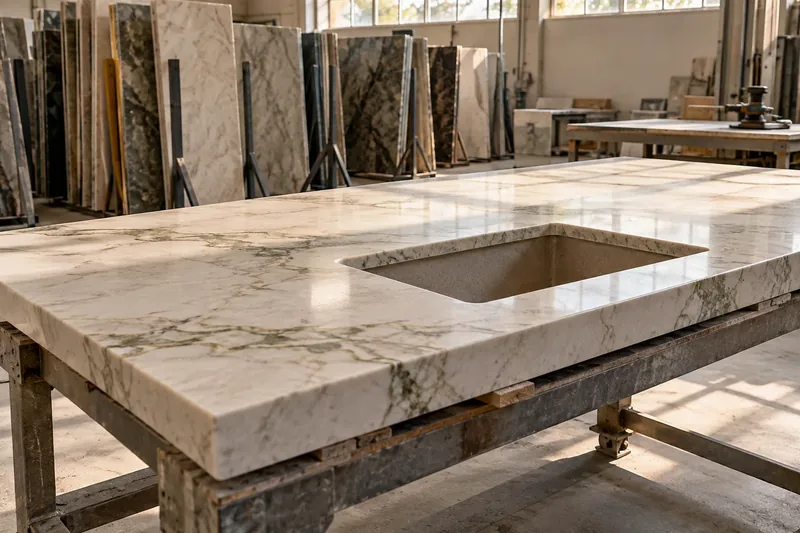
Countertop installation and replacement in Austin. Laser templating, old tops removed, sink and cooktop refitted. One firm written price.
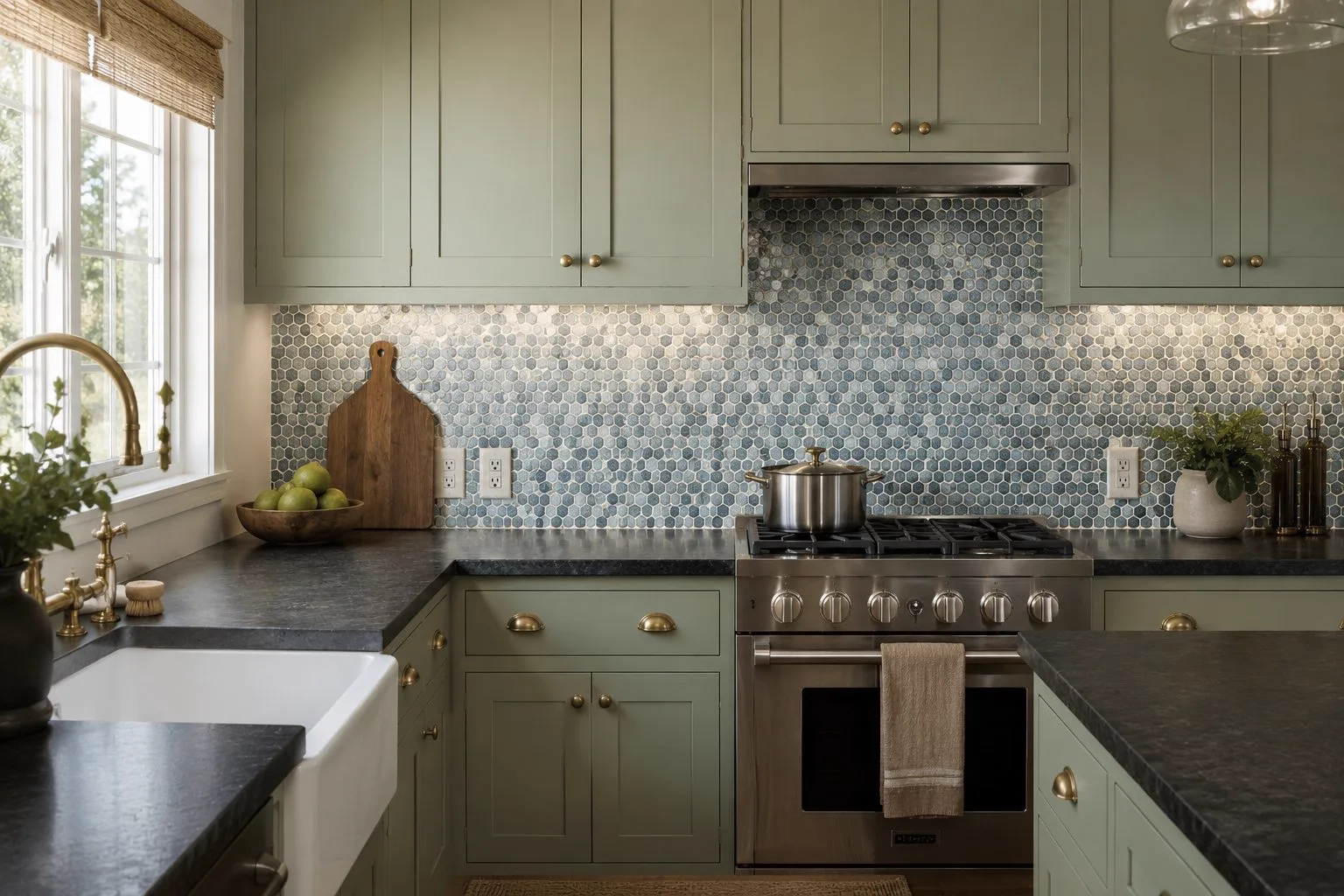
Glass mosaic, glass subway tile and single back-painted glass panels, measured with your new countertops so outlets, the range wall and the stone line up cleanly.
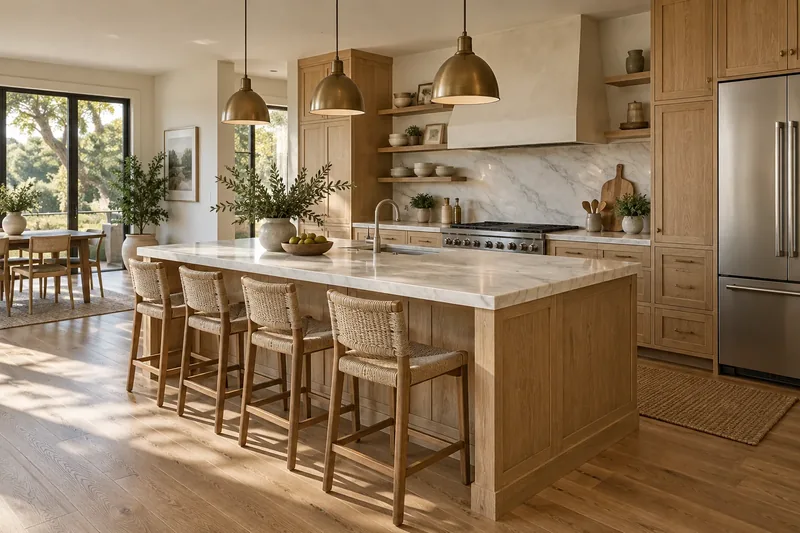
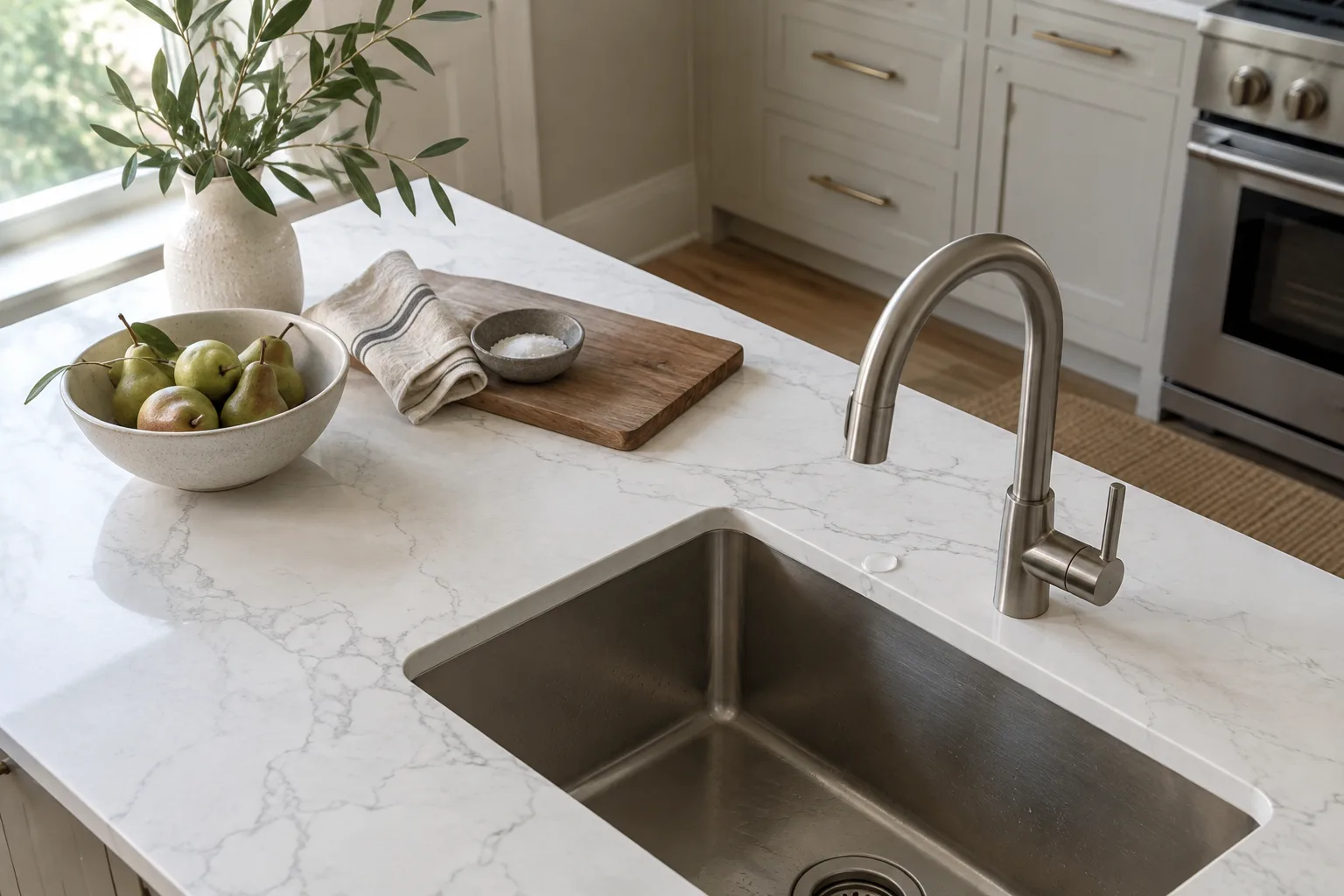
Kitchen countertop replacement in Austin. Quartz, granite, marble and quartzite, laser templated and installed by our own crew. Free measure.
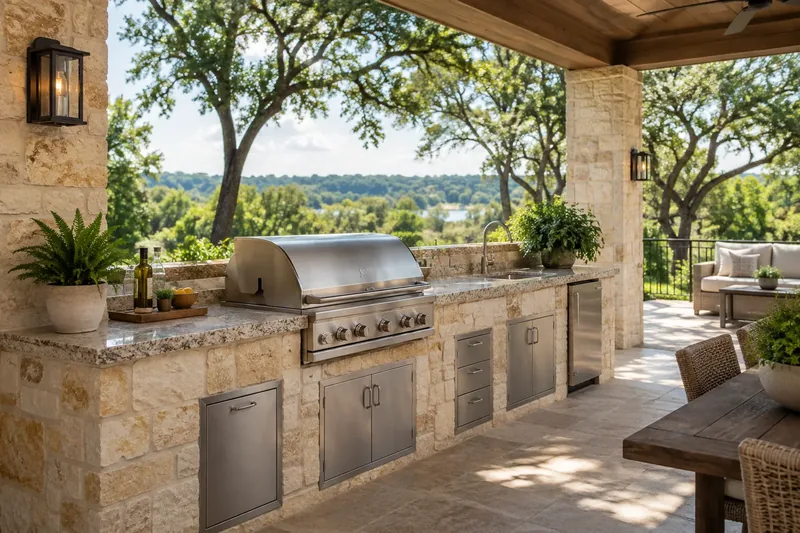
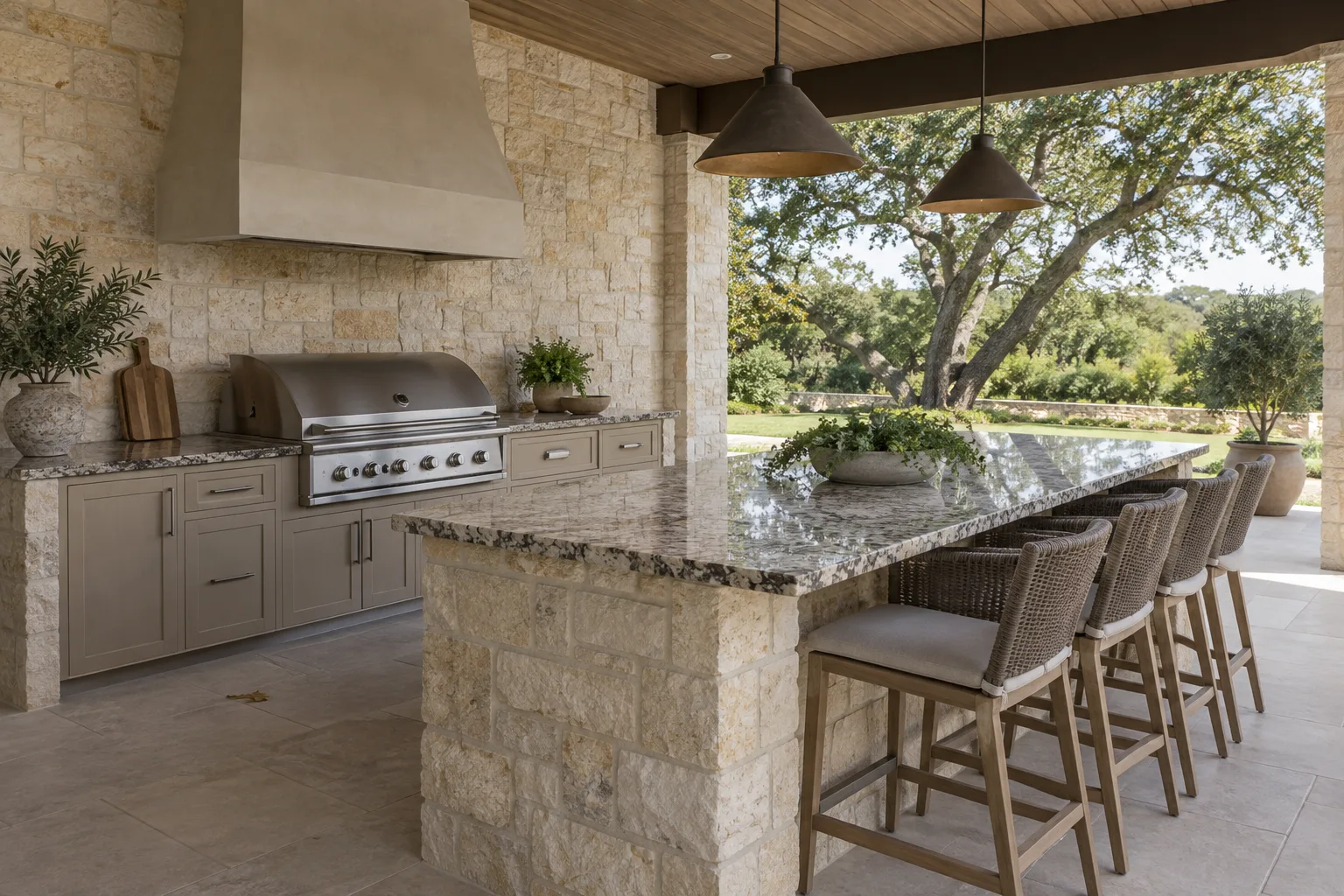
Outdoor kitchen countertops in Austin. Granite and porcelain that survive Hill Country sun and heat. Honest advice on what fails outdoors.
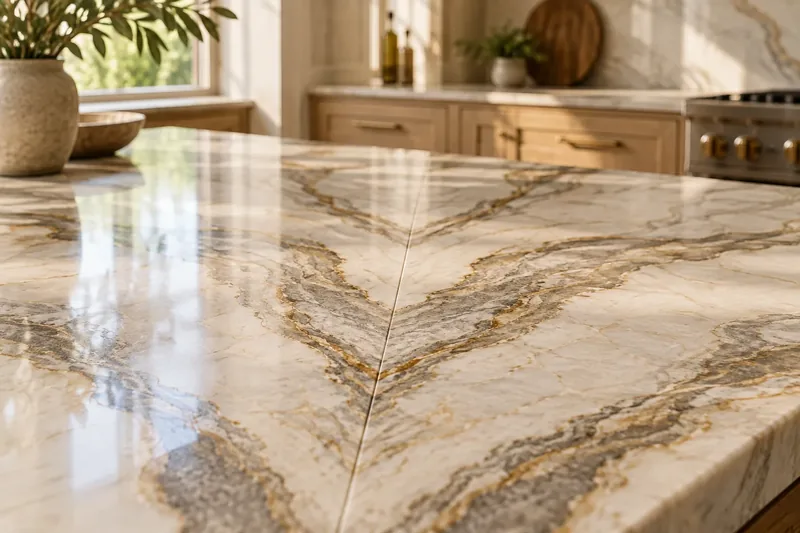
Quartzite countertops fabricated and installed in Austin. Marble looks with granite durability. Honest testing on what you are actually buying.
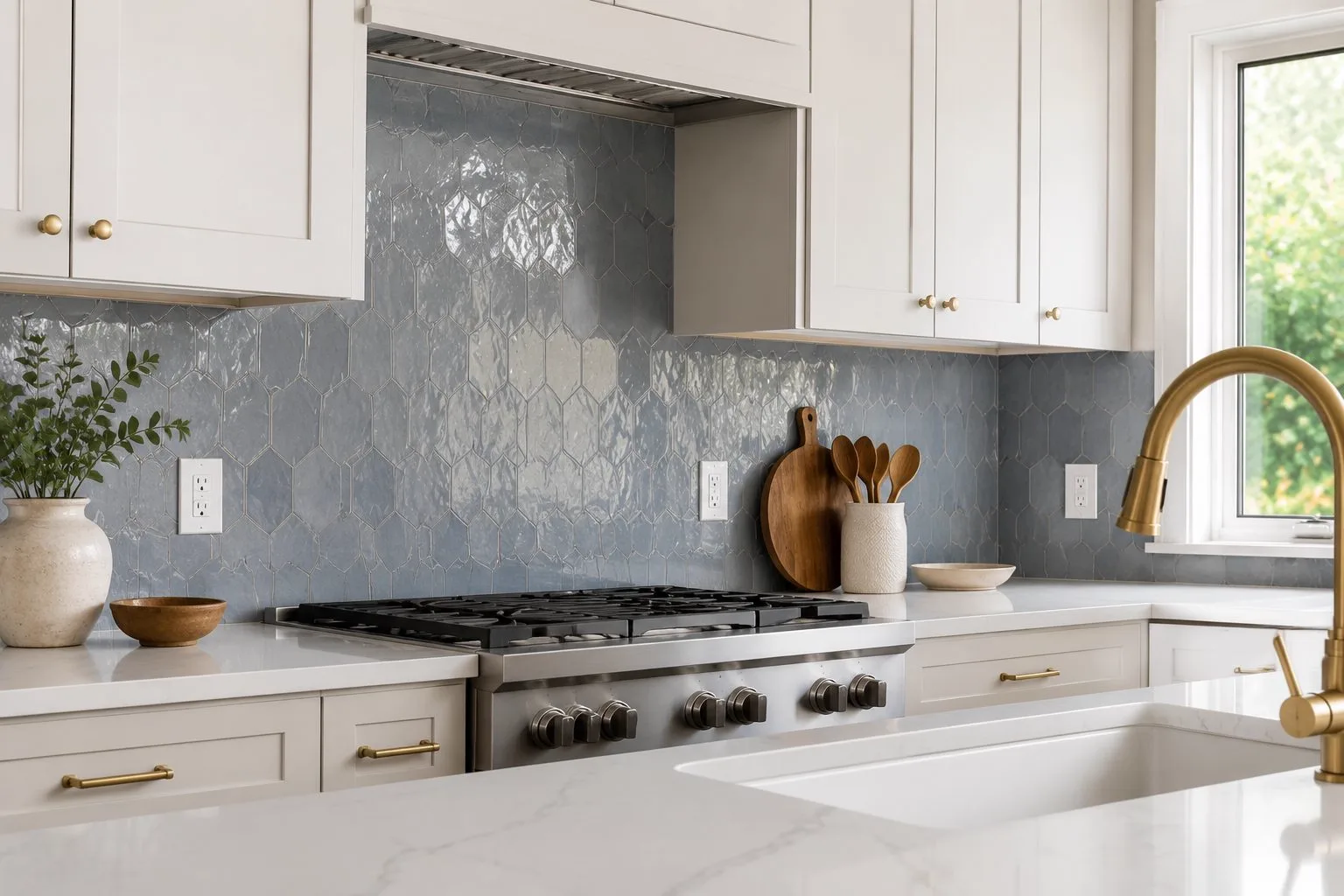
Ceramic, porcelain, zellige and stone mosaic backsplashes in herringbone, stacked or offset layouts, with grout and trim chosen to meet your countertop properly.
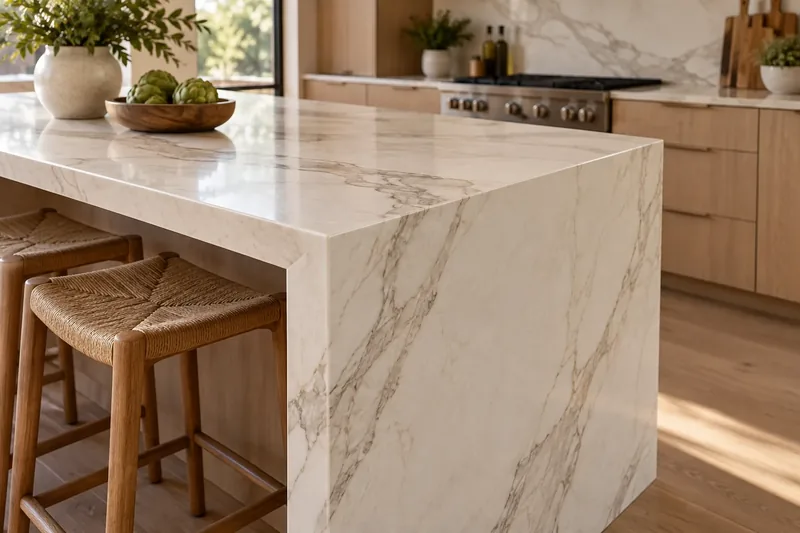
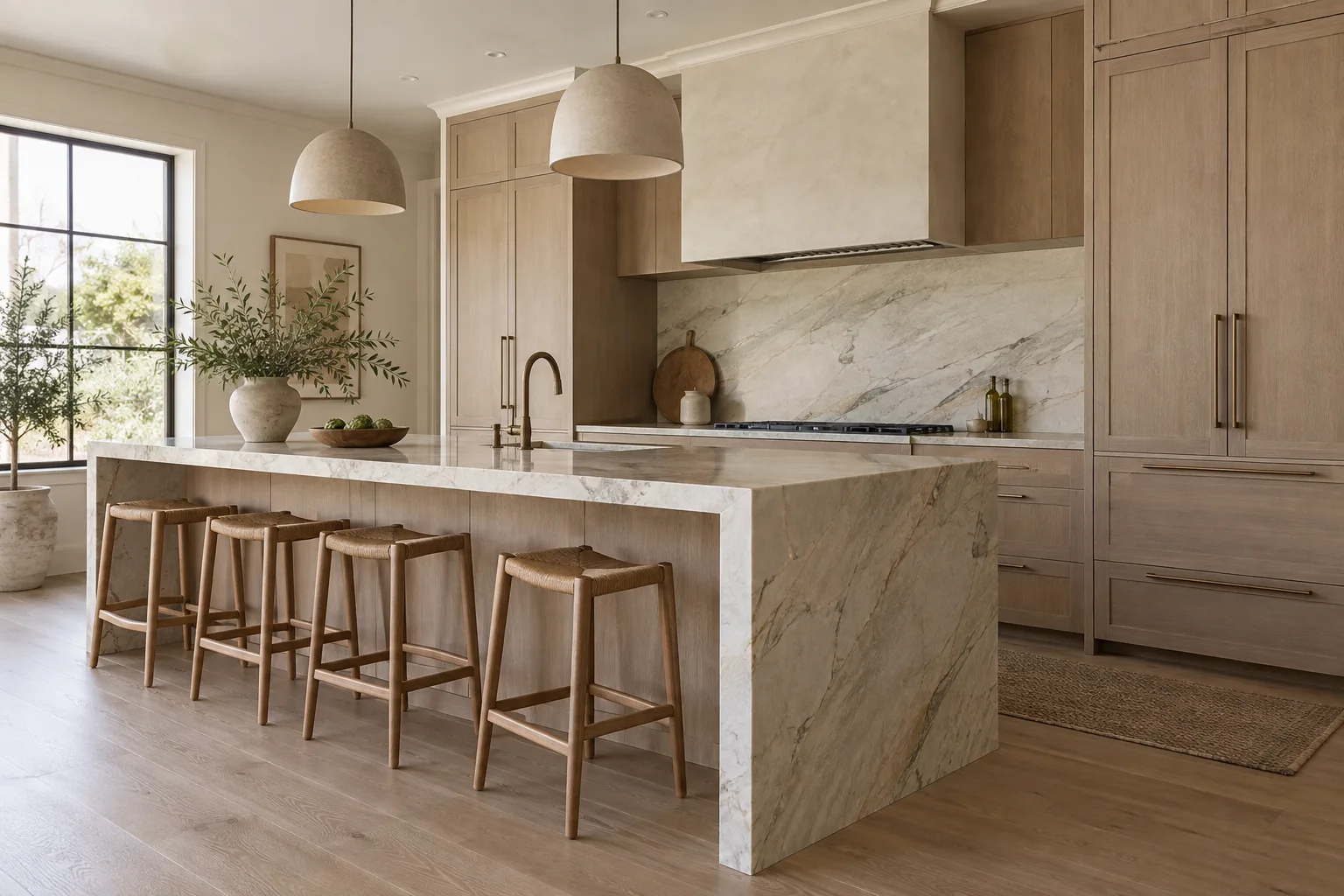
Waterfall edge kitchen islands fabricated in Austin. Mitred corners with the veining run continuously down the side. Free measure and firm price.
Choosing a material
What separates these four materials is mechanical, not decorative. Engineered quartz is manufactured: about 93 percent crushed stone aggregate bound in roughly 7 percent polyester resin by weight, pressed under vacuum until the slab has virtually no porosity. The other three are quarried. Granite is intrusive igneous rock, 20 to 60 percent quartz by volume in an interlocking matrix with feldspar and mica. Quartzite is sandstone heated and squeezed until the grains and their old cement recrystallized into a single interlocking mosaic, at least 80 percent quartz. Marble is recrystallized limestone, so it is calcite, which drives nearly everything a marble owner must think about.
Hardness follows mineralogy, not price. Quartz sits at 7 on the Mohs scale, above window glass at 5.5 and ordinary steel at roughly 4 to 4.5, so quartz, granite and quartzite all shrug off a dropped knife and all three need diamond tooling or an abrasive waterjet to cut. Calcite sits at 3, so a marble worktop is softer than the pan you set on it. It scratches, and no sealer stops that.
Porosity is a separate axis, and the two get conflated. Engineered quartz is effectively non porous and never needs sealing. Granite takes a penetrating impregnator rather than a coating, at something like every five to ten years with modern products. Quartzite resists chemical weathering, which is the geological way of saying acid does not touch it. Marble is soft, porous and stains readily, and because calcite reacts with acid, lemon, wine and many bathroom cleaners etch the polish in the shape of the spill. An etch is not a stain, so wiping achieves nothing. Consumer Reports rates engineered quartz the most stain resistant common household surface, granite second.
Heat and sun
Engineered quartz is unaffected below 150 C, about 300 F, and that number describes the resin rather than the stone. Above it the binder discolors and breaks down permanently, because you cannot polish out a scorch that went through the resin holding the slab together. Granite and quartzite have no organic binder to cook, so they take heat far better. That is why we steer a heavy cook toward natural stone, and hand everyone a trivet anyway.
Sunlight is the harder limit and settles the outdoor question on its own. Polyester resins are not completely UV stable, and the material's own guidance is that engineered stone should not be used outdoors, because exposure discolors it and breaks down the binder. Austin gets about 2,650 hours of bright sunshine a year, reaches 90 F on 123 days in an average year and 100 F on 29 of them, and has recorded 112 F. A roof over the run is not shade enough. Outdoors we fabricate granite or porcelain, and we will decline a quartz outdoor top rather than warrant one we expect to fail.
Which service
The work splits two ways and most people arrive knowing one half. A material page answers what the surface is made of. A room page answers what gets built. If you already know the stone, start from the material. If you know only the room, start there, because the room narrows the material faster than the reverse.
A kitchen is the most demanding space in a house for a worktop: heat at the range, standing water at the sink, impact everywhere, and a layout that almost never comes out square. A vanity is smaller and gentler with a fussier detail list, because basin type and faucet spread decide the cut. An island with a mitered waterfall panel is closer to joinery than to worktop fitting, since the vein has to carry round the corner and the panel needs something real holding it up. Outdoor is decided by the sun. Commercial is decided by repeatability, because when forty units have to match you are buying batch consistency rather than a slab you fell for. A straight replacement, cabinets staying and only the surface changing, is its own job.
Two different jobs
Fabrication is what happens to the slab: cutting the shapes, working the edge profile, machining the sink opening, drilling the tap holes. Installation is what happens in your house: tear out, dry fit, scribe, level, set, seam, silicone, refit. Many firms do one and buy in the other, and the joint between those two companies is where jobs go wrong: each side can be right on its own terms while the result does not fit the room.
We do both. We template digitally off your installed cabinets, which produces a machine file rather than a drawing, that file drives the saw in our own Austin shop, and the crew that measured sets the finished pieces. All cutting is done wet, with extraction, in the shop and never in your kitchen. Stone is cut with diamond tooling or an abrasive waterjet carrying garnet at 30,000 to 90,000 psi, accurate to about five thousandths of an inch, and cold, with no heat affected zone at the cut. That matters on the narrow strip of stone beside a cooktop opening, which decides whether the piece survives being carried in.
Templating needs the cabinets set, leveled and fastened, and the sink and cooktop on site or pinned to exact model numbers, since every opening is cut to the fixture. Installation is a single day on a normal kitchen, and what you lose is the sink, not the room.
Seams and pattern
Slab size sets the seam. A run longer than a slab has one whoever fabricates it, so the question is where it lands, not whether it exists. Structurally a seam belongs over a cabinet wall with support beneath it, never over an appliance opening, and well clear of a sink or cooktop cutout, because the stone beside an opening is the weakest section of the top.
Visually it depends on the material. Engineered quartz is made to be consistent from slab to slab, so two pieces from different slabs of one color will match. Natural stone will not. Blocks are sawn on gangsaws with steel shot, or on multi wire diamond saws carrying as many as 60 wires, and slabs from one block resemble each other while slabs from another block of the same commercial name can look like a different rock. A busy pattern hides a seam. A quiet one shows it.
Pattern repeat is that fact from the other side. Engineered quartz repeats, because it is a manufactured design, and on a long run a strong printed vein reads as wallpaper if it is not laid out with that in mind. Natural stone never repeats, which is why two kitchens will not match.
So the layout is decided on photographs of your actual slabs, seams marked, before the saw runs. A seam you agreed to reads as a detail. A seam you meet on install day reads as a mistake.
What drives the price
There is no per square foot number on this page and there is not one on any page here. A figure published before anyone has measured your room is a guess, and a guess made to win a call is always low. What we can do is name every input, because they are the same inputs whichever service brought you here.
Area and layout set the floor, and the real driver is yield off the slab rather than square footage: two straight runs cut cleanly out of one slab waste less than a galley with two returns and an island. Material grade moves it hard, and on natural stone grade is about supply rather than quality: a common domestic granite and a rare imported slab sit far apart. Strong directional veining then has to be laid out so the pattern meets correctly at each seam, which cuts the usable area of every slab.
Thickness moves material and labor at once: the thicker material is dearer per slab and heavier to handle, while the thinner one often needs a built up or mitered edge to read thick. Edge profile is tooling and passes, an eased edge being a single pass where an ogee or a mitered waterfall is several plus hand polishing. Cutouts are counted by kind, not just by number, since an undermount opening is polished to a finished visible edge and needs real support underneath.
Then the practical items, which are the ones missing from most comparison quotes: removal and disposal of the old surface, cabinets needing leveling first, and the plumbing reconnection, where a corroded shutoff valve that will not seat again is the most common surprise. Check whether tear out, haul away and the plumbing sit inside any quote you compare us with.
We do not publish a per square foot figure, because the slab you choose, the edge you want and the number of cutouts move the total more than the size of your kitchen. You get a free measure and then one firm written number covering template, fabrication, installation, tear out and haul away. Check that the quote you are comparing includes both.
The measure is free and carries no obligation. We cover Austin and five communities west of it: West Lake Hills, Rollingwood, Barton Creek, Lakeway and Steiner Ranch. Because the shop is in Austin, the window between templating and installation stays inside the same week wherever in the metro you are.
Granite or quartzite. Both are natural stone with no resin binder to degrade, so they handle a hot pan far better than engineered quartz, which starts to suffer above roughly 300 F. Quartzite is the harder and more stain resistant of the two. Use a trivet either way, since direct heat cooks a sealer off that spot.
No, and we will decline the job rather than warrant it. The polyester resin that binds engineered quartz is not completely UV stable, so prolonged sun discolors the slab and breaks down the binder holding it together. Austin sees about 2,650 hours of bright sunshine a year. Outdoors we fabricate granite or porcelain.
Granite, marble and quartzite take a penetrating impregnator that soaks in, not a coating that sits on top, and modern sealers have pushed the interval out to something like every five to ten years on most materials. Do not work from a calendar. Leave water on the surface for fifteen minutes, and if the stone darkens, reseal.
Some seam is usually unavoidable, because a run longer than a slab has one whoever does the work. Visibility depends on the material and the layout. Engineered quartz is consistent from slab to slab, so a seam closes well. On natural stone the vein has to be matched across the joint, and a busy pattern hides a seam better than a quiet one.
In house. We template digitally, cut and polish on our own CNC in our own Austin shop, and the crew that measured your room is the crew that installs it. That matters because fabrication and installation are separate trades, and when two companies split them each can be right on its own terms while the top still does not fit.
Separate two things. Nobody warrants the geology of a natural slab, which formed long before any of us. What can and should be warranted is workmanship: seam quality, the fit to your walls and cabinets, the edge finish, and the support under overhangs and cutouts. Those terms are written onto your quote before you sign.
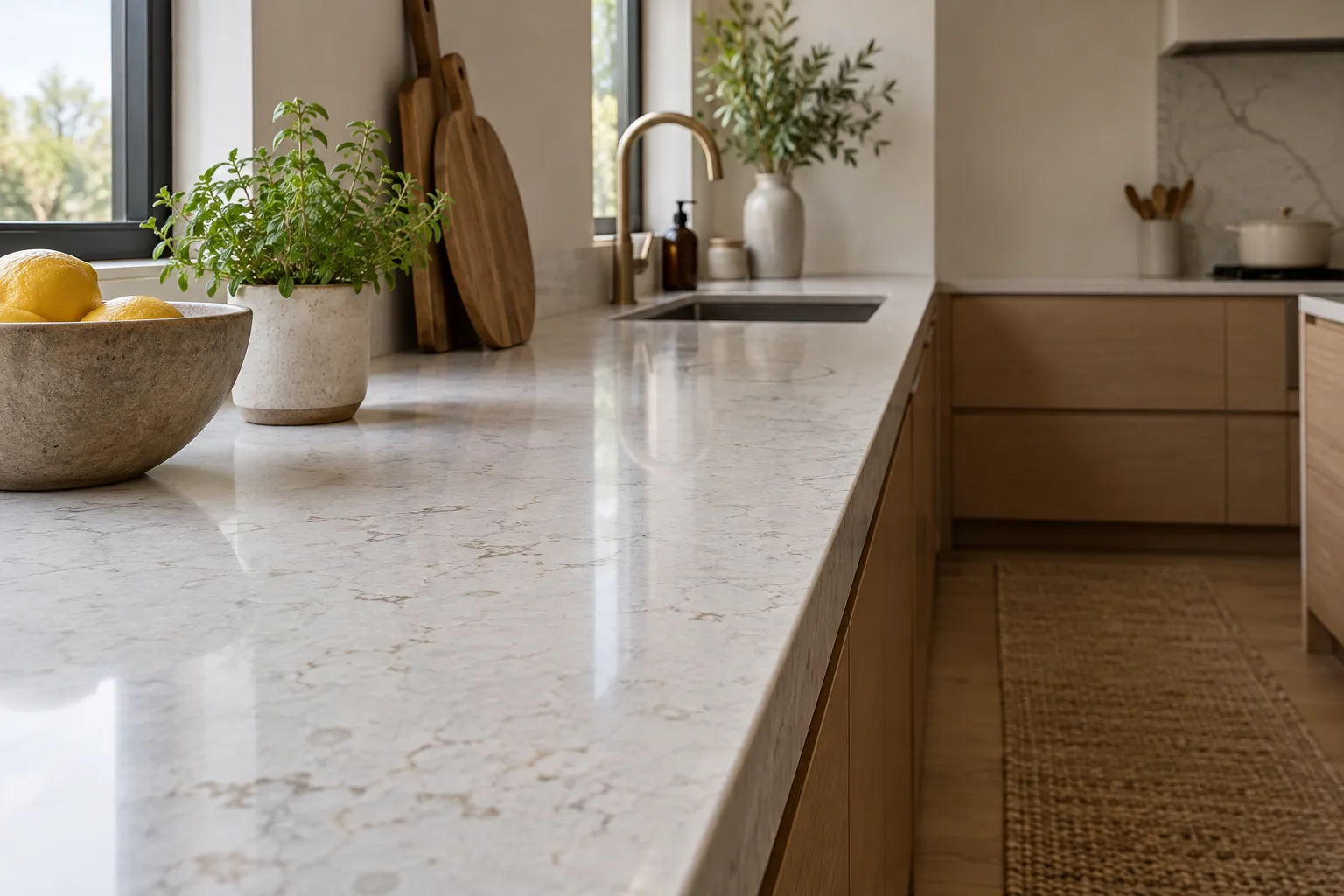
We laser template off your cabinets and confirm sink, cooktop and overhang details in about an hour.
You choose your actual slab rather than a sample chip, so the movement and veining you approve is the one that gets installed.
Cut, edged and polished in our Austin shop, typically five to ten working days from template.
Old tops out, new tops set and seamed, sink and cooktop refitted. Most kitchens finish in a day.
Free measure across Austin and the surrounding Hill Country. No obligation, and no add-ons at install.
Calls only, we do not receive text messages.