
Porosity varies enormously
Dark, dense granites absorb almost nothing. Light and heavily patterned stones are thirstier and need sealing more often. We test the slab you choose and tell you which it is.
Austin · West Lake Hills · Rollingwood · Barton Creek · Lakeway
Austin Custom Countertops cuts and fits granite countertops in Austin, TX, and is Travis County's trusted source for natural stone, specializing in slab selection at the yard, layout planned on photographs of the exact block you reserved, and granite countertop fabrication in 2 cm and 3 cm. We offer polished, honed and leathered finishes and a penetrating impregnator applied before handover.
Request a FREE Quote!
Our team provides a straight identification of what a stone really is, because some dark rock sold as granite is dolomitic and will etch like marble, delivering an igneous surface that takes a cast iron pan for homes and outdoor granite countertops that hold their color through a Texas summer for both residential and commercial projects. Every top is cut on our own CNC in our own Austin shop and set by the crew that templated it, with the workmanship warranty written onto the quote before you sign.
From the fifteen minute water test that tells you when the sealer is actually due to a yard visit where you pick the block yourself and watch us mark the cuts on it, our team handles every detail. We are serving Austin, Lakeway and West Lake Hills, and the estimate names the stone you are buying, including the times when the trade name on the tag does not match the rock underneath it.
Granite is a coarse grained intrusive igneous rock. It formed from silica rich magma that cooled slowly underground, and slow cooling is what gave it visible crystals instead of a fine paste. Mineralogically, true granite runs 20 to 60 percent quartz by volume, with 35 to 90 percent of its feldspar being alkali feldspar, plus plagioclase, and usually some biotite mica or amphibole for the darker flecks. Those minerals grew into each other as the melt cooled, which produces an interlocking, roughly equigranular matrix rather than layers or cemented grains.
That interlocking structure is the reason granite countertops last. The rock is nearly always massive, meaning it has no internal planes of weakness, and its compressive strength is usually above 200 MPa. Density runs 2.65 to 2.75 grams per cubic centimeter, which is why a 3 cm island top takes four people to carry and why the cabinets underneath have to be checked before anything is set on them.
Hardness comes from the quartz, which sits at 7 on the Mohs scale and is insoluble under kitchen conditions. That is well above a steel knife blade. It is also why the stone that goes into your countertops has to be cut with diamond tooling or abrasive waterjet, and never with a conventional saw.
The trade word granite covers more rock than the geological term does. Slabs sold as granite include granodiorites and monzogranites, and some dark commercial granites are not granite at all. This matters for two reasons: the mineral mix changes how dense and how absorbent a slab is, and it changes how the stone reacts to acids. Real granite is quartz and feldspar, so a lemon does nothing to it. A stone sold as black granite that is actually a dolomitic rock behaves like marble and will etch. We tell you which you are buying.
Blocks are cut from the quarry face with diamond wire or belt saws, then slabbed, historically on reciprocating gangsaws using steel shot as the abrasive and now on multi wire diamond saws that can carry as many as 60 wires and slab a block in under two hours. Slabs cut from the same block are similar. Slabs from a different block of the same commercial name can look like a different stone entirely.
So granite countertops are not ordered from a sample chip. You look at the actual slab, or at high resolution photographs of the specific slabs we have reserved, and the layout is planned on that image before anything is cut. Where the movement runs, where a dark vein lands, and whether a striking figure ends up on the island or hidden under a cabinet run are all decisions made on the computer at that stage.
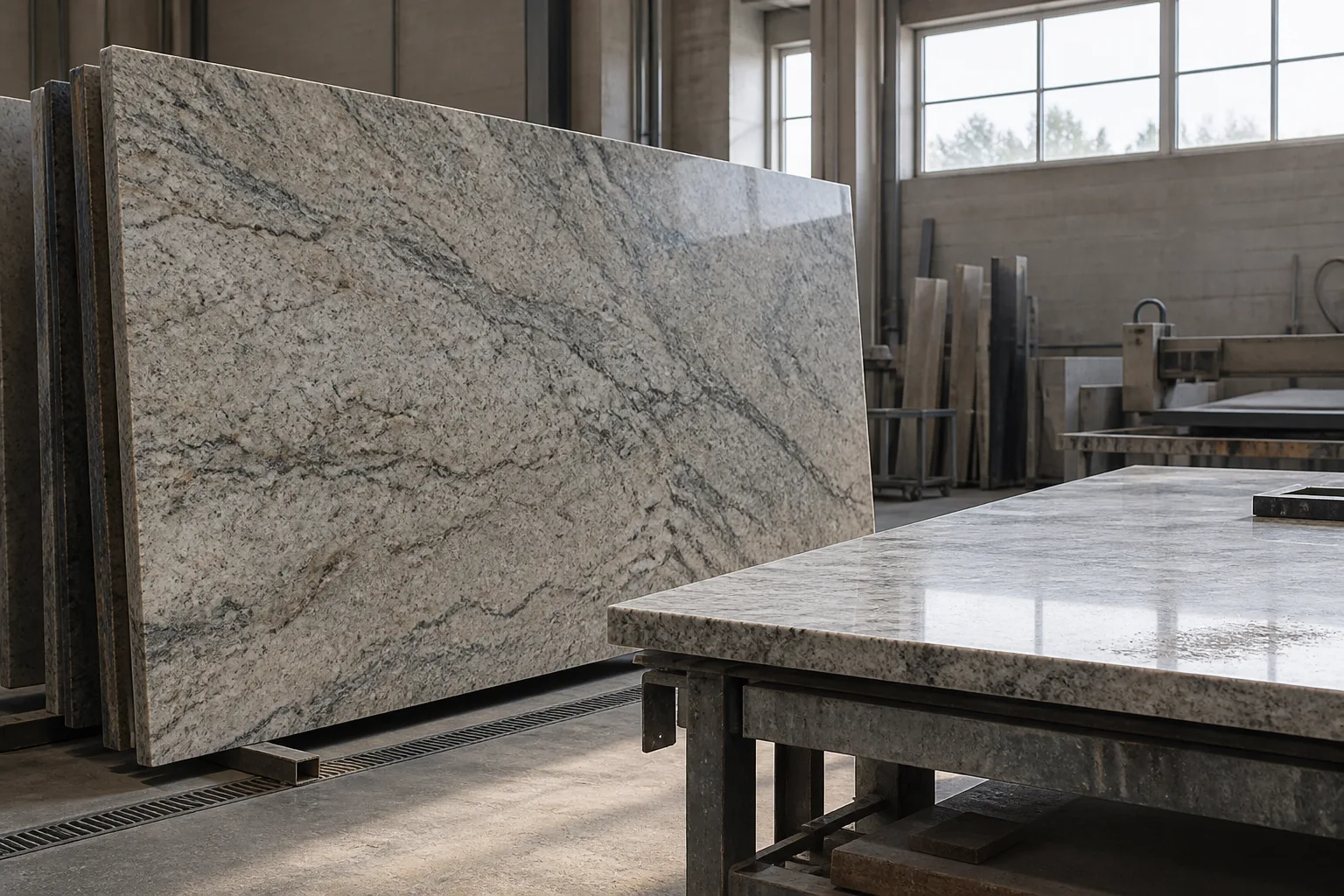
Finish changes the stone more than most people expect. A polished finish gives an almost mirror like luster and accentuates color, making the pattern more vivid. A honed finish is smooth and satin, closer to eggshell, and nonreflective. Flamed or thermal finishing uses high heat to produce a textured, nonreflective face. Bush hammering gives a rough but uniformly patterned surface, and sandblasting gives an irregular pitted one. Rougher finishes lighten the apparent color and subdue the pattern, which is why a honed sample of a dramatic slab can look disappointingly flat next to the polished version of the same stone.
For interior countertops in Austin, polished and honed are the practical choices, with leathered finishes popular on darker stones because they hide fingerprints and water spots that gloss black shows immediately. Flamed and bush hammered belong outside, where slip resistance matters more than luster.
Edge profiles on natural stone are cut with hand held routers, grinders or CNC equipment. We run them on the CNC from the same program that cut the top, so the profile is the same at every corner and at every return. Thickness is usually 2 cm or 3 cm. A 3 cm granite countertop can be profiled directly at full thickness. A 2 cm top is often laminated at the edge with a second strip of stone to read thicker, which is a real piece of fabrication, not a trim.
Granite is the correct specification for anyone who cooks with cast iron and heavy pans. There is no resin binder in it, so it does not scorch the way engineered quartz does above about 150 C. It is also the right material for an outdoor kitchen or a pool bar in this climate. Engineered quartz should not be used outdoors, because its polyester resin is not fully UV stable and breaks down under prolonged sun. Austin reaches 90 F on 123 days in an average year and 100 F on 29 of them, with a record of 112 F. Granite handles that.
It is not the right choice for someone who wants no maintenance at all. Granite has real, if small, porosity, and it needs sealing. Of common household surfaces, engineered quartz is the most stain resistant and granite is second, which is an honest summary: granite resists stains well, quartz resists them better and needs nothing done to it.
It is also not the right choice if you want two kitchens to match, or a kitchen now and a pantry in a year. Natural slabs vary. If uniformity across a large open plan space is your priority, quartz will do that and granite will not. And if you want the hardest, most stain resistant natural stone available, quartzite outperforms granite on both counts, at a higher price and with a harder fabrication.
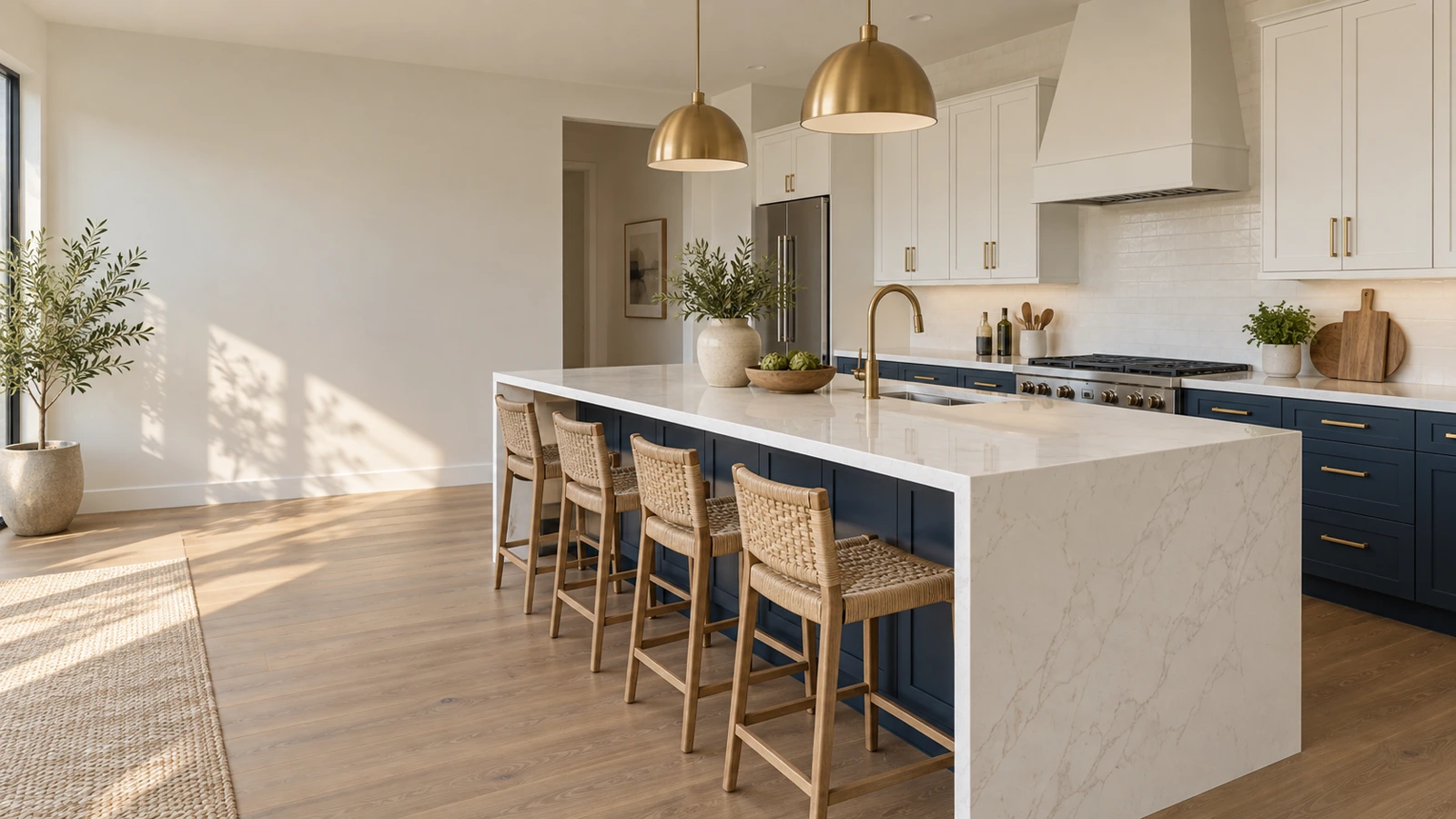
A granite countertop is sealed with a penetrating impregnator, not a coating. The product soaks into the pore structure and makes it water repellent from below the surface, leaving the stone looking and feeling unchanged. A sealer buys you time, it does not create a force field. Oil left on an unsealed patch for a day will still darken the stone. What a sealer does is make a spill sit on the surface long enough for you to wipe it up.
How often it needs redoing depends on the stone, not on a calendar. A dense dark granite may go years. A light, more absorbent slab may want it annually. Test it yourself: drop a tablespoon of water on the countertop and leave it 15 minutes. If the stone darkens where the water sat and then dries back, it is time to reseal. If it beads and leaves nothing, it is fine.
Day to day, warm water and a pH neutral cleaner. Skip abrasive powders, which dull polish, and skip heavy alkaline cleaners. Chips at a sink edge or an exposed corner happen and are filled with color matched epoxy, which is more successful on busy patterned granite than on a plain one. Cracks, when they appear, almost always trace to an unsupported overhang or a poorly supported cooktop cutout rather than to the stone failing.
One question we get asked and will answer straight: radioactivity. Some granites contain around 10 to 20 parts per million uranium. The EPA's position is that available data are not sufficient to conclude that the granite types commonly used in countertops significantly increase indoor radon, and that it is extremely unlikely radiation from a granite countertop raises annual dose above natural background. Radon from the soil under the house is the far larger risk. If it concerns you, test the air in your home, which is the recommendation regardless of what your countertops are made of.
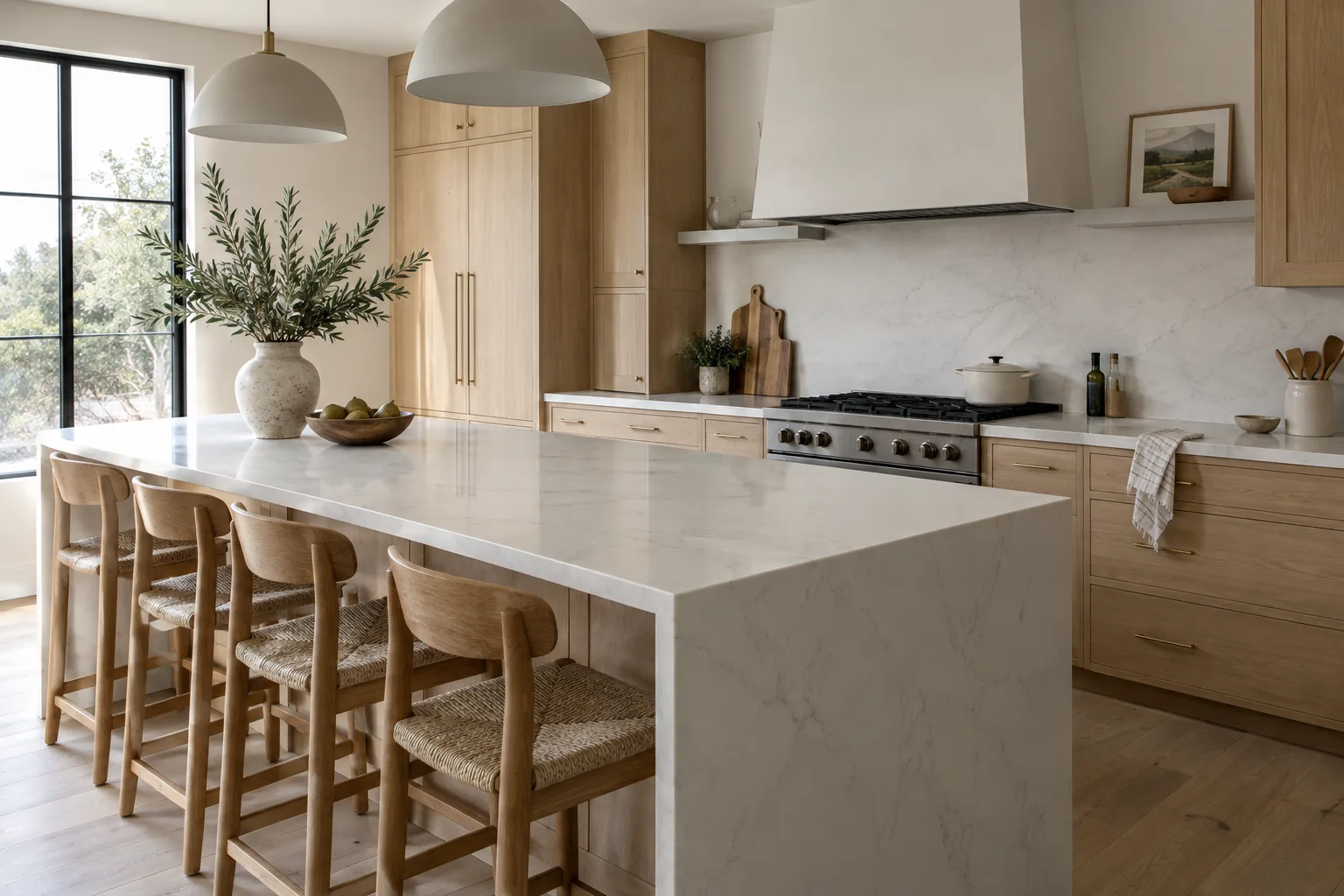
There is no price per square foot on this page, because a number published before anyone has measured your kitchen is a guess. Here is exactly what moves the figure on the written price we hand you.
Square footage sets the floor. Material grade moves it hard, and on natural stone the grade is about supply, not quality: a common domestic stone that quarries easily and a rare imported slab with dramatic movement are priced worlds apart even though both are granite and both will outlive the cabinets.
Slab movement and layout difficulty are their own line. A stone with strong directional veining has to be laid out so the pattern flows and meets correctly at each seam, and that reduces the usable yield of every slab. Sometimes matching the movement across a long run and an island means buying an extra slab, which is a material cost caused by aesthetics, not by square footage.
Edge profile is labor and tooling. An eased or beveled edge is a single pass. An ogee, a double roundover or a mitered waterfall is multiple passes plus hand polishing, and on a 2 cm top a built up edge means cutting, bonding, aligning and polishing a second piece of stone so the joint disappears.
Cutouts add cost per opening and per type. A drop in sink sits in a templated hole. An undermount needs its cutout polished to a finished edge because that edge is visible and touched daily, and it needs real support underneath. A cooktop cutout leaves narrow, fragile sections of stone on either side that have to survive cutting, transport and setting. Every faucet, air gap and soap dispenser hole is another drilling operation.
Seams cut both ways. More seams means more fabrication and more time on site. Fewer seams can mean buying more material to get a long run out of one piece. The right answer depends on your layout, and we will show you where the seams fall before you approve anything.
Thickness affects both material and handling: 3 cm costs more per slab and is heavier to move, while 2 cm often costs more in labor once the edge is built up. Removal and disposal of the old countertops is real work, and a laminate tear out is quick while a bonded tile or stone top has to be broken out without wrecking the cabinets, then hauled away. Plumbing reconnection closes the job: sink, faucet, disposal and dishwasher drain all come off and go back on, and a corroded shutoff valve that will not seat is the single most common surprise on a countertop replacement.
Dark, dense granites absorb almost nothing. Light and heavily patterned stones are thirstier and need sealing more often. We test the slab you choose and tell you which it is.
A slab is roughly 3m by 1.9m. An island longer than that needs a seam, and where the seam falls is a design decision we make at template, not at install.
Veining runs one way. Laying a perimeter run and an island with the movement in different directions is the mistake that makes an expensive kitchen look wrong.
Eased, bullnose, ogee. A heavy profile suits a traditional kitchen and eats into apparent thickness on a 2cm slab.
It takes heat. A pan straight off the burner will not mark it, which is the single practical advantage it holds over quartz. In exchange it is porous and wants sealing, typically once a year on a lighter stone and less often on a dark one.
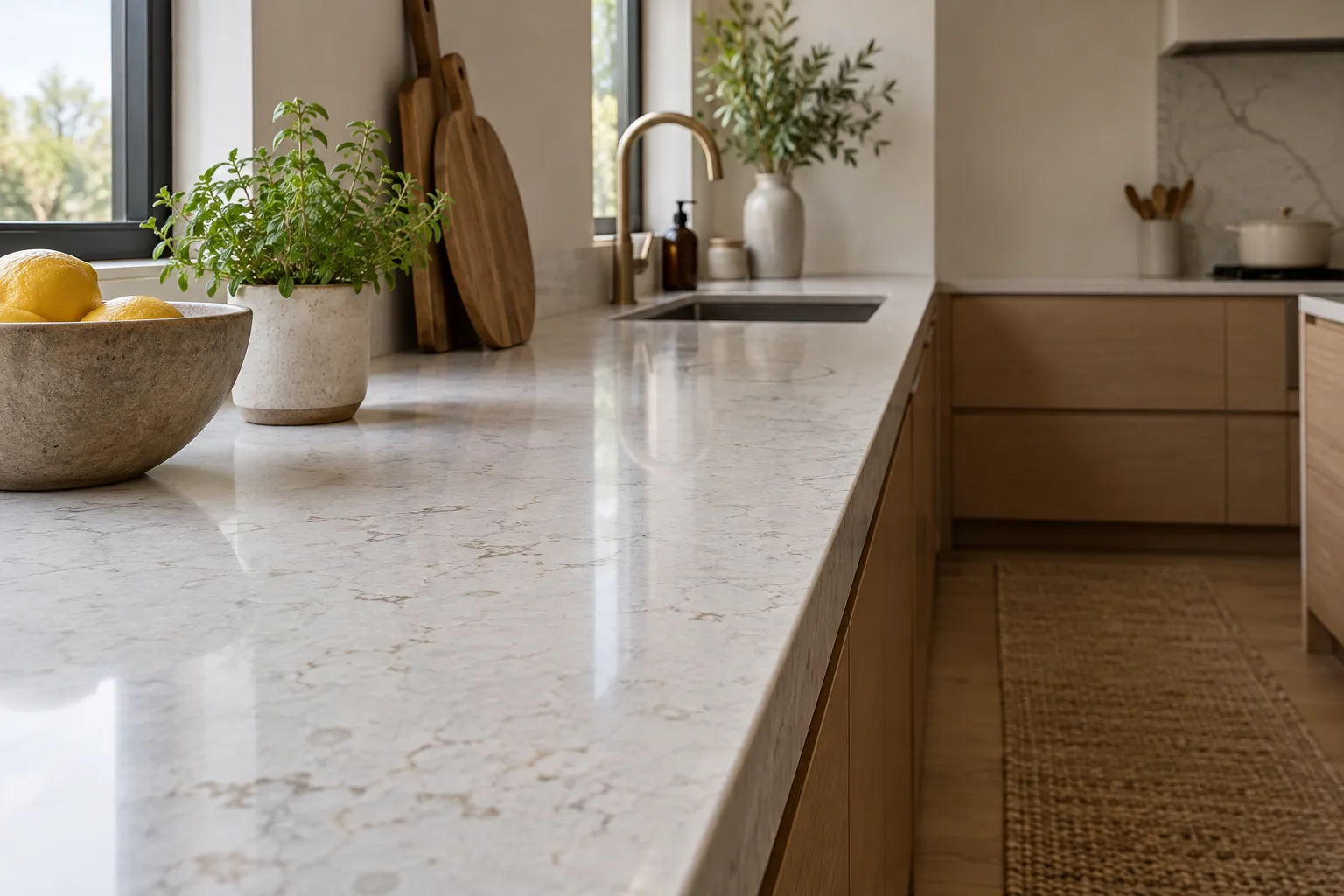
We laser template off your cabinets and confirm sink, cooktop and overhang details in about an hour.
You choose your actual slab rather than a sample chip, so the movement and veining you approve is the one that gets installed.
Cut, edged and polished in our Austin shop, typically five to ten working days from template.
Old tops out, new tops set and seamed, sink and cooktop refitted. Most kitchens finish in a day.
We do not publish a per square foot number, because on natural stone the slab you choose can change the total more than the size of your kitchen does. What we do is measure, plan the layout on your actual slab, and give you one firm written price covering template, fabrication, install, tear out and reconnection. If you are comparing quotes, check whether the other one includes removal of the old countertops and the plumbing work, because those are the two lines most often left out.
Two visits. The laser template takes an hour or two on site. Cutting and edge work happen on our CNC in our shop. The install is the second visit. The gap between them is shop queue time and slab availability, and we commit both dates in writing when you book rather than giving you a range.
Very little dust, because all the cutting is done wet in our shop and never in your kitchen. What you do lose is the sink. The plumbing comes off for tear out and goes back on at install, so plan on no working kitchen sink from tear out until the day after the countertops are set. Silicone and seam adhesive need time to cure, so we ask for light use for the first 24 hours.
Yes, granite is porous and wants a penetrating sealer. How often depends on the specific stone, not on a schedule somebody wrote on a card. Test it: leave a tablespoon of water on the countertop for 15 minutes. Darkening means reseal. Beading means leave it alone. Dense dark granites can go years between applications. Light absorbent ones may want it yearly.
It tolerates heat far better than engineered quartz, because there is no polyester resin to degrade above about 150 C. In practice, the stone will take a hot pan. We still recommend a trivet, for two reasons: a sealer is an organic product and repeated direct heat will cook it off in that spot, and a very hot pan set on a cold slab creates a temperature gradient that acts as a mechanical load. Granite is a much more forgiving countertop for a heavy cook, but it is not indestructible.
Heat and outdoor use point to granite. Consistency and zero maintenance point to quartz. Quartz is the most stain resistant common household surface and needs no sealing ever, but it scorches permanently above roughly 300 F and cannot go outside because its resin is not UV stable. Granite handles heat and sun and gives you a one of a kind slab, at the cost of sealing it and accepting that no two pieces match exactly. If you want the hardest and most stain resistant natural option and budget allows, quartzite beats both, and we fabricate that too.
Chips happen at exposed edges, most often at an undermount sink cutout or an outside corner, usually from something heavy dropped. They are filled with color matched epoxy, and the repair disappears far better on a busy patterned stone than on a plain one. Cracks are rarer and almost always come from poor support, an overhang with no bracket, or a badly cut cooktop opening, which is a fabrication and installation problem rather than a stone problem. That is on us, and it is the part we warrant.
Separate the two things. The stone itself is a natural material and no one warrants the geology of it. What can and should be warranted is workmanship: seam quality, the fit to your walls and cabinets, the edge finish, the support under overhangs and cutouts, and the plumbing we reconnect. Because we template, fabricate and install with our own people, there is nobody to point at when something needs putting right. The specific warranty terms are written on your quote before you sign it, not described to you over the phone.
Free measure across Austin and the surrounding Hill Country. No obligation, and no add-ons at install.
Calls only, we do not receive text messages.